
Muscle · Lower limb
Gracilis muscle: origin, insertion, action and innervation
The gracilis runs from the pubis to the upper medial tibia in the pes anserinus, adducts the thigh, flexes the knee, and is supplied by the obturator nerve.
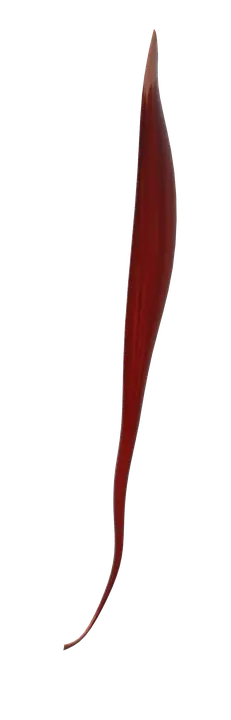
Quick answer
- Latin name
- Musculus gracilis
- Origin
- Body and inferior ramus of the pubis (hip bone)
- Insertion
- Upper medial surface of the tibia, below the medial condyle, in the pes anserinus
- Action
- Adducts the thigh; flexes the knee and rotates the leg medially when the knee is bent
- Innervation
- Obturator nerve, anterior division (L2–L3)
- Blood supply
- Deep femoral artery and its medial circumflex femoral branch
See it on the 3D body
The gracilis lit on the 3D hip and thigh, as in the hip and thigh quiz. Turn the body, peel the layers, tap any structure for its name.
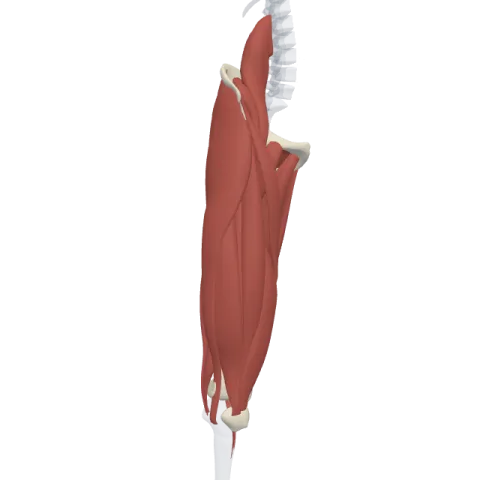
The gracilis is a long, thin strap muscle on the inner side of the thigh, running from the pubis to the upper medial surface of the tibia. It adducts the thigh, helps flex the knee, and is supplied by the obturator nerve (L2–L3).
Where it is
The gracilis is the most superficial and most medial muscle of the adductor group, in the medial compartment of the thigh. It runs as a narrow ribbon down the inner edge of the thigh, from the groin to just below the knee, lying along the inner border of the adductor longus and the adductor magnus.
At the knee it passes behind the medial condyle of the femur, between the sartorius in front and the semitendinosus behind. The three tendons then curve forward and fan out together onto the tibia. With the knee bent and the thigh pulled in, its thin tendon can be felt behind the inner side of the knee. Its position among the other thigh muscles is shown on muscles of the thigh.
Origin and insertion
- Origin: a thin, flat tendon from the lower half of the body of the pubis and the inferior pubic ramus, close to the pubic symphysis. The pubis is part of the hip bone.
- Insertion: the upper part of the medial surface of the tibia, just below the medial condyle. There its tendon joins those of the sartorius and the semitendinosus to form the pes anserinus ("goose's foot"), a flat, three-pronged tendon attachment on the inner side of the tibia.
In the pes anserinus, the three tendons line up from front to back: sartorius, gracilis, semitendinosus.
What it does
The gracilis is the only adductor that crosses both the hip and the knee, so it acts on two joints:
- Adduction of the thigh: it pulls the thigh toward the midline, with the other adductors.
- Knee flexion: it passes behind the axis of the knee and helps bend it.
- Medial rotation of the leg: when the knee is bent, it turns the leg inward, like the sartorius and semitendinosus that share its insertion.
- Hip flexion: it gives a small contribution to flexing the thigh at the hip.
With the other pes anserinus muscles, it also helps steady the inner side of the knee.
Because it is long and thin, it produces far less force than the large adductors such as the adductor magnus. Its particular feature is reach: it is the one adductor that acts on the hip and the knee at the same time.
Innervation and blood supply
The gracilis is supplied by the anterior division of the obturator nerve (roots L2 and L3), like the adductor longus and the adductor brevis. The obturator nerve reaches the thigh through the obturator foramen of the hip bone.
Blood comes from the deep femoral artery and its medial circumflex femoral branch, which enter the muscle in its upper third; smaller branches of the femoral artery supply its lower part.
How to remember it
- Gracilis = slender, graceful. It's the thinnest of the adductors, a ribbon down the inner thigh.
- "Say Grace before Tea": the pes anserinus from front to back is Sartorius, Gracilis, semiTendinosus.
- One muscle from each compartment ends in the pes anserinus: sartorius (front, femoral nerve), gracilis (medial, obturator nerve), semitendinosus (back, sciatic nerve).
- The only adductor that crosses the knee.
Frequently asked questions
What is the main action of the gracilis?
It adducts the thigh. Because it crosses the knee, it also flexes the knee and rotates the leg medially when the knee is bent.
Where does the gracilis insert?
On the upper medial surface of the tibia, below the medial condyle, as the middle tendon of the pes anserinus, between the sartorius and the semitendinosus.
Which nerve supplies the gracilis?
The anterior division of the obturator nerve, from roots L2 and L3.
Which muscles form the pes anserinus?
The sartorius, the gracilis and the semitendinosus. Their tendons join on the upper medial surface of the tibia.
Is the gracilis an adductor?
Yes. It belongs to the adductor group of the medial thigh, and it is the most superficial and most medial of them.
