Table · Upper limb
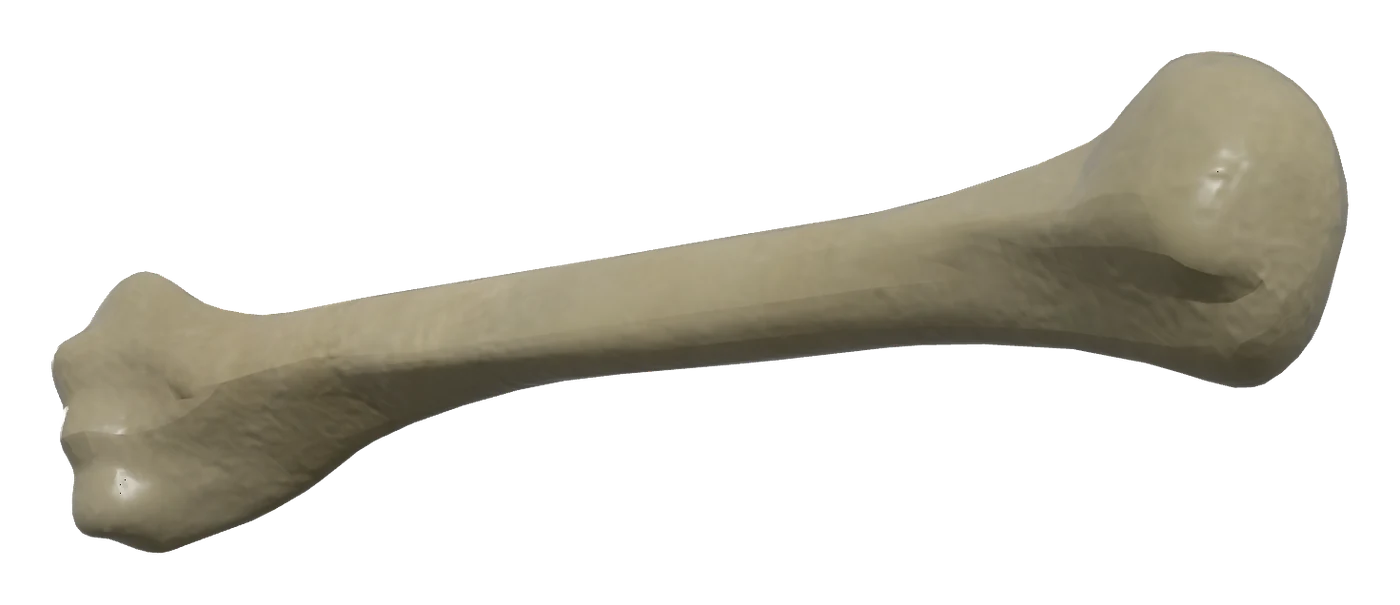
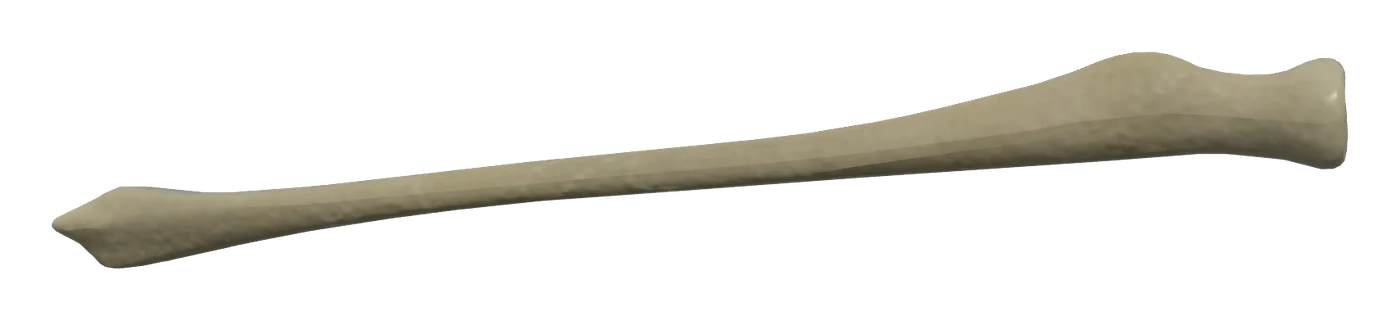
Bones of the arm: humerus, radius and ulna
The arm has three long bones: the humerus in the upper arm, and the radius (thumb side) and ulna (little-finger side) in the forearm. Joints and muscles.
The arm has three long bones: the humerus in the upper arm, between the shoulder and the elbow, and the radius and ulna in the forearm, between the elbow and the wrist. The radius is on the thumb side, the ulna on the little-finger side.
At a glance
| Bone | Muscles that originate here | Muscles that insert here |
|---|---|---|
| Humerus | Brachioradialis, Extensor carpi radialis brevis, Extensor carpi radialis longus, Extensor carpi ulnaris, Extensor digitorum, Flexor carpi radialis, Flexor carpi ulnaris, Flexor digitorum superficialis, Pronator teres, Triceps brachii | Deltoid, Infraspinatus, Latissimus dorsi, Pectoralis major, Subscapularis, Supraspinatus, Teres major, Teres minor |
| Radius | Abductor pollicis longus, Extensor pollicis brevis, Flexor digitorum superficialis, Flexor pollicis longus | Biceps brachii, Brachioradialis, Pronator quadratus, Pronator teres |
| Ulna | Extensor carpi ulnaris, Extensor indicis, Extensor pollicis longus, Flexor carpi ulnaris, Flexor digitorum profundus, Flexor digitorum superficialis, Flexor pollicis longus, Pronator quadratus, Pronator teres | Triceps brachii |
From the anatomical data behind Anatomy Atlas 3D (Z-Anatomy, CC BY-SA 4.0, reviewed). Names link to the detailed page when there is one.
Arm, forearm or upper limb?
Anatomists split the upper limb into three parts: the arm (shoulder to elbow), the forearm (elbow to wrist) and the hand. In that strict sense the arm has a single bone, the humerus. In everyday speech "the arm" means the whole limb from shoulder to wrist, so most people asking about the bones of the arm mean all three: humerus, radius and ulna.
Counting the hand, each upper limb has 30 bones: the humerus, the radius, the ulna, 8 carpals, 5 metacarpals and 14 phalanges. The bones of the hand page covers the last 27. The clavicle and the scapula attach the limb to the trunk. They form the shoulder girdle and are not counted among the 30.
How the three bones fit together
Humerus: the upper arm
The humerus is the only bone of the upper arm. Its rounded head fits into the glenoid cavity of the scapula at the shoulder joint. Its lower end is flat and wide, with two joint surfaces side by side: the trochlea, shaped like a pulley, for the ulna, and the rounded capitulum for the radius. The bumps on either side are the medial and lateral epicondyles. Most forearm flexors start from the medial one and most extensors from the lateral one.
Ulna: the hinge of the elbow
The ulna is the medial bone of the forearm. At the top, its C-shaped trochlear notch grips the trochlea of the humerus. That grip makes the elbow a hinge that bends and straightens. The bony point of your elbow is the olecranon, the top of the ulna. The ulna is thick at the elbow and thin at the wrist.
Radius: the bone that turns
The radius is the lateral bone of the forearm. It is shaped the other way round: a small disc-shaped head at the elbow and a wide lower end that forms most of the wrist joint with the carpal bones. Its head turns against the capitulum of the humerus and in a notch on the side of the ulna.
Joints between them
- Elbow: the humerus meets the ulna (trochlea in the trochlear notch) and the radius (capitulum against the radial head).
- Proximal radioulnar joint: the radial head turns in the radial notch of the ulna, just below the elbow.
- Distal radioulnar joint: at the wrist, the head of the ulna sits in the ulnar notch of the radius.
- Interosseous membrane: not a joint but a tough fibrous sheet that ties the radius and ulna together along their shafts.
What they do together
The humerus and ulna make the elbow a hinge: the forearm bends and straightens on the upper arm. The two radioulnar joints add a second movement, rotation. When you turn your palm down (pronation), the radius crosses over the ulna and the two bones form an X. When you turn it up (supination), they lie parallel again. The radius does the turning, around a nearly still ulna.
The elbow is not perfectly straight either. Look at someone standing with palms forward: the forearm angles out from the line of the humerus, by 5 to 15 degrees. Anatomists call this the carrying angle, and it keeps a swinging hand or a carried bag clear of the hip. Women tend to have a wider angle than men.
The muscles follow the same layout. The upper arm muscles move the elbow: the biceps brachii and brachialis bend it and the triceps brachii straightens it. The biceps inserts on the radius, so it also turns the palm up. The shoulder muscles also pull on the humerus: the rotator cuff inserts on the tubercles at its top, the deltoid halfway down the shaft. Most of the forearm muscles start on the epicondyles, radius and ulna and send tendons to the wrist and fingers. The table below lists the attachments the app records for each bone.
How to learn them
- One, then two. One bone in the upper arm, two in the forearm. The same plan repeats in the leg: femur, then tibia and fibula.
- Radius by the thumb. Stand with your palms facing forward: the radius is on the thumb side, the ulna on the little-finger side. The ulna is the bone you lean on when you put your elbow on a table. Medial and lateral always refer to this palms-forward position, as the guide to anatomical directional terms explains.
- Watch the radius turn. Hold your forearm with your other hand and turn your palm down, then up. You feel the lower end of the radius roll around the ulna while the elbow end of the ulna stays put.
- Match the joint surfaces. The pulley (trochlea) sits in the ulna's notch; the round capitulum meets the round head of the radius.
- Feel the landmarks. You can find the olecranon at the point of the elbow, both epicondyles on either side of it, and the styloid processes of the radius and ulna on either side of the wrist.
Exams ask you to name these bones on a diagram, say which forearm bone is lateral, name the bones at the elbow, or explain which bone moves in pronation. In the app, hide the muscle layers to see the bare skeleton of the arm, rotate it to compare the front and back views, and tap each bone for its name in English and Latin. Then quiz yourself on the upper limb by tapping the bone the app names, or try the free arm and elbow quiz in your browser.
Frequently asked questions
What are the three bones of the arm?
The humerus in the upper arm, and the radius and ulna in the forearm. In strict anatomical terms only the humerus is in the arm, and the radius and ulna are the forearm bones.
Which forearm bone is on the thumb side?
The radius. The ulna is on the little-finger side.
Which bone forms the point of the elbow?
The ulna. Its top end, the olecranon, is the bony point you feel at the back of the elbow.
How many bones are in the whole upper limb?
Thirty in each limb: humerus, radius, ulna, 8 carpals, 5 metacarpals and 14 phalanges. The clavicle and scapula form the shoulder girdle and are counted separately.
Which forearm bone crosses over in pronation?
The radius. With the palm turned down, the radius and ulna form an X; with the palm up, they lie parallel again.