Region · Lower limb
Muscles of the hip: gluteal muscles, deep rotators and hip flexors
The muscles of the hip include the three gluteal muscles, the tensor fasciae latae, the deep lateral rotators and the iliopsoas. Learn how they move and steady the hip.
The muscles of the hip fall into three groups: the gluteal muscles of the buttock, which extend and abduct the thigh; the small deep lateral rotators under them; and the iliopsoas in front, the strongest flexor of the hip. Together they move the thigh in every direction and keep the pelvis level each time you stand on one foot.
At a glance
| Muscle | Origin | Insertion | Action |
|---|---|---|---|
| Gluteus maximus | Hip bone, Sacrum | Femur, Iliotibial tract | Extends and laterally rotates the hip |
| Gluteus medius | Hip bone | Femur | Abducts and medially rotates the hip; steadies the pelvis when walking |
| Gluteus minimus | Hip bone | Femur | Abducts and medially rotates the hip; steadies the pelvis when walking |
| Tensor fasciae latae | Hip bone | Iliotibial tract | Flexes, abducts and medially rotates the hip; tenses the iliotibial tract |
| Piriformis | Sacrum | Femur | Laterally rotates and abducts the hip |
| Superior gemellus | Hip bone | – | Laterally rotates the hip |
| Obturator internus | Hip bone | – | Laterally rotates the hip |
| Inferior gemellus | Hip bone | – | Laterally rotates the hip |
| Iliacus | Hip bone | Femur | Flexes the hip |
| Psoas major | Vertebrae T12–L5 | Femur | Flexes the hip; flexes the trunk |
From the anatomical data behind Anatomy Atlas 3D (Z-Anatomy, CC BY-SA 4.0, reviewed). Names link to the detailed page when there is one.
How they are organized
The hip joint is a deep ball and socket between the hip bone and the head of the femur. This page groups 10 muscles that cross it from behind, from the side and from the front.
Gluteal muscles
- The gluteus maximus is the large superficial muscle that shapes the buttock. It runs from the back of the pelvis, the sacrum and the coccyx down and outwards to the femur and the iliotibial tract.
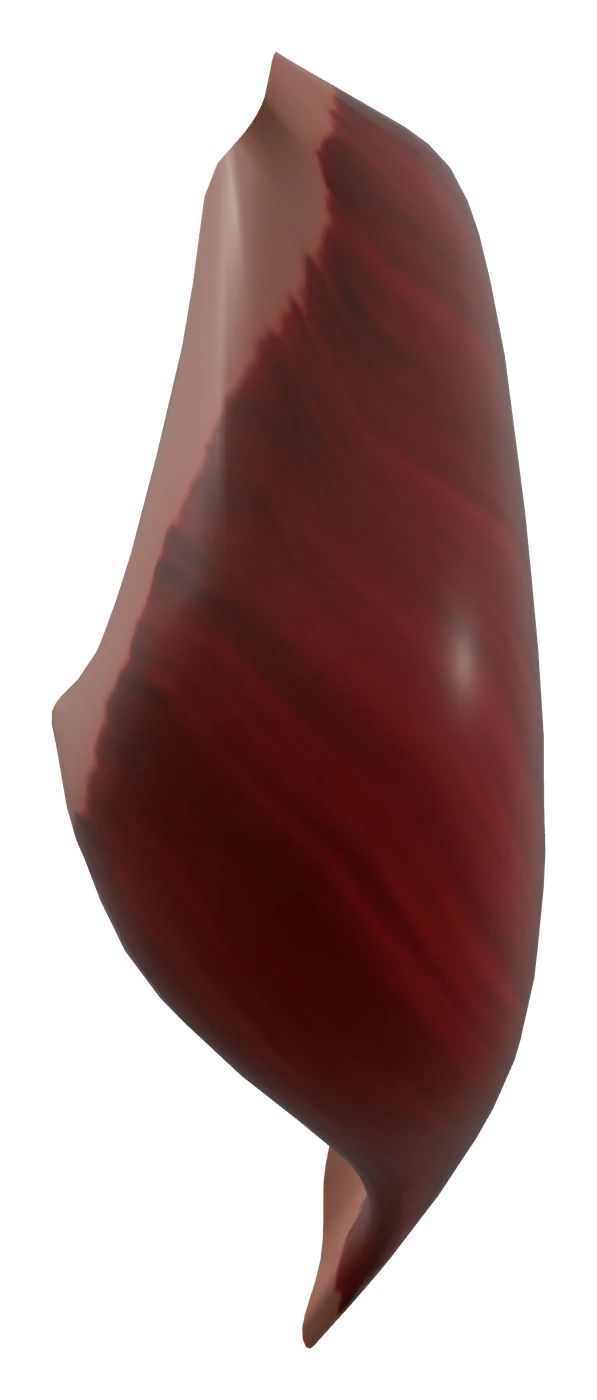
- The gluteus medius lies partly under it, on the outer surface of the ilium.
- The gluteus minimus is the deepest and smallest of the three, directly under the medius.
- The tensor fasciae latae sits at the front of the same layer. It tightens the iliotibial tract, the thick band on the outside of the thigh, which it shares with the gluteus maximus.
The gluteus maximus is supplied by the inferior gluteal nerve; the gluteus medius, minimus and tensor fasciae latae by the superior gluteal nerve.
Deep lateral rotators
Under the gluteus maximus, a row of short muscles runs almost horizontally from the pelvis to the greater trochanter of the femur. From top to bottom: the piriformis, the superior gemellus, the obturator internus and the inferior gemellus. The two gemelli ("twins") hug the tendon of the obturator internus and join it. Below them come the quadratus femoris and, deeper, the obturator externus, which this site groups with the thigh muscles.
The piriformis is a key landmark: the sciatic nerve usually leaves the pelvis just below it. In some people part or all of the nerve passes through or above the muscle instead, a well-known variation.
Hip flexors
The iliacus lines the inner bowl of the ilium, and the psoas major runs down from the sides of the lumbar vertebrae. They join below the inguinal ligament as the iliopsoas and end on the lesser trochanter of the femur. A small psoas minor lies on the psoas major in some people and is absent in others. The iliacus is supplied by the femoral nerve and the psoas major by branches of the lumbar plexus.
What they do together
- Extension. The gluteus maximus is the main extensor of the hip when force is needed: climbing stairs, standing up from a squat, running uphill. For easy walking on flat ground the hamstrings do much of the work.
- Abduction and pelvic stability. The gluteus medius and minimus abduct the thigh, but their most important job is the reverse: when you lift one foot, those of the standing side hold the pelvis level so it does not drop toward the lifted leg. Their front fibers also rotate the thigh inwards.
- Lateral rotation. The deep rotators turn the thigh outwards and press the head of the femur into its socket, a little like a rotator cuff for the hip.
- Flexion. The iliopsoas lifts the thigh toward the trunk, as in climbing or kicking. With the thigh fixed, it flexes the trunk on the thigh, as in a sit-up.
How to learn them
- Three glutes, three depths: maximus on top, medius in the middle, minimus deepest. The size follows the name.
- Two gluteal nerves: inferior for the maximus alone, superior for the medius, minimus and tensor fasciae latae.
- Deep rotators from top to bottom: Piriformis, Gemellus superior, Obturator internus, Gemellus inferior, Quadratus femoris. Read the initials P-G-O-G-Q and picture the two gemelli as twins on either side of the obturator internus.
- Iliopsoas = iliacus + psoas: two origins, one tendon, one insertion on the lesser trochanter.
Practical exams often ask you to identify the piriformis and the structures above and below it, or to name the muscle that keeps the pelvis level during walking. In the app, hide the gluteus maximus to expose the deep rotators, peel the layers in front of the spine to follow the psoas major down from the lumbar vertebrae, and quiz yourself on the lower limb and pelvis by tapping each muscle on the 3D body.
Frequently asked questions
What are the three gluteal muscles?
The gluteus maximus, gluteus medius and gluteus minimus, from superficial to deep.
What is the strongest hip flexor?
The iliopsoas, made of the iliacus and the psoas major, which share one tendon to the lesser trochanter of the femur.
What do the deep lateral rotators do?
They rotate the thigh outwards and help hold the head of the femur in the hip socket.
Which muscles keep the pelvis level when you walk?
Mainly the gluteus medius and gluteus minimus of the leg you are standing on.