Muscle · Lower limb
Gluteus medius: origin, insertion, action and innervation
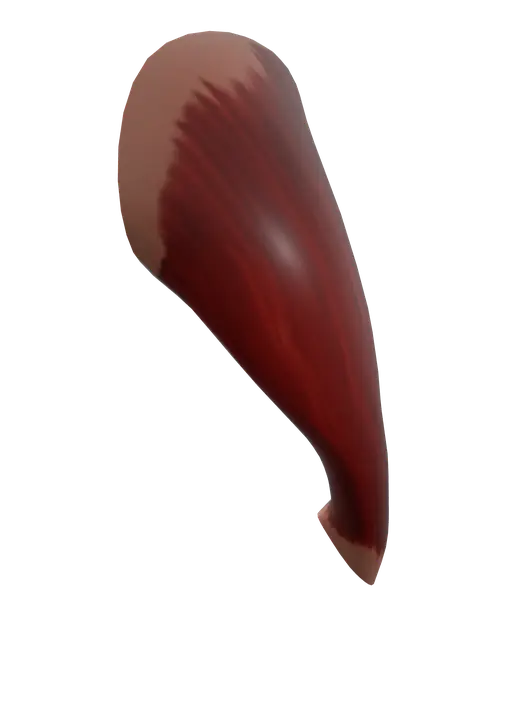
The gluteus medius arises from the outer ilium, inserts on the greater trochanter of the femur, abducts the hip and levels the pelvis (superior gluteal nerve).
Quick answer
- Latin name
- Musculus gluteus medius
- Origin
- Outer surface of the ilium between the anterior and posterior gluteal lines (hip bone)
- Insertion
- Lateral surface of the greater trochanter of the femur
- Action
- Abducts the hip; anterior fibers rotate the thigh medially; keeps the pelvis level when standing on one leg
- Innervation
- Superior gluteal nerve (L4–S1)
- Blood supply
- Superior gluteal artery
See it on the 3D body
The gluteus medius lit on the 3D pelvis, as in the pelvis quiz. Turn the body, peel the layers, tap any structure for its name.
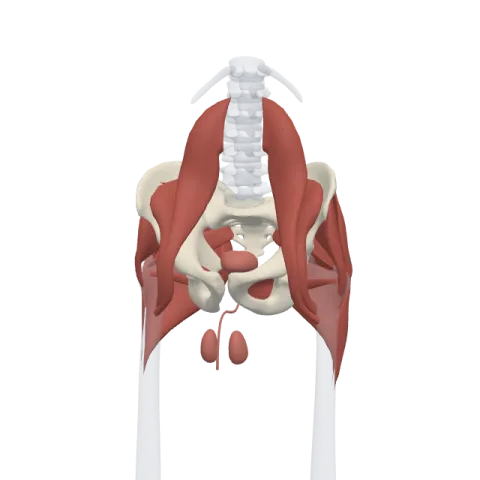
The gluteus medius is a thick, fan-shaped muscle on the outer side of the pelvis, running from the outer surface of the ilium to the greater trochanter of the femur. It abducts the hip, keeps the pelvis level when you stand on one leg, and is supplied by the superior gluteal nerve (L4–S1).
Where it is
The gluteus medius lies on the outer surface of the pelvis, between the gluteus maximus and the gluteus minimus. Its back two-thirds are covered by the gluteus maximus; its front third lies just under the skin and fascia on the side of the hip, below the iliac crest, where you can feel it tighten when you shift your weight onto one leg.
Under it lies the smaller gluteus minimus, which has a very similar shape and job. In front, it borders the tensor fasciae latae. See all the gluteal muscles together on muscles of the hip.
Origin and insertion
- Origin: the broad outer surface of the ilium, between the anterior and posterior gluteal lines, just below the iliac crest, and the fascia that covers it. The ilium is the upper, wing-shaped part of the hip bone.
- Insertion: its fibers converge like a fan onto a flat tendon that attaches to an oblique ridge on the lateral surface of the greater trochanter of the femur.
The gluteal lines are faint ridges on the ilium that separate the attachments of the three glutes: the maximus behind the posterior line, the medius between the posterior and anterior lines, and the minimus between the anterior and inferior lines.
What it does
- Abduction of the hip: it lifts the thigh out to the side, for example when you step sideways or get onto a bike.
- Keeping the pelvis level: this is its most important everyday job. When you lift one foot off the ground to take a step, the body's weight tends to make the pelvis drop toward the unsupported side. The gluteus medius of the standing leg contracts and holds the pelvis level, so you can swing the other leg through. It does this at every step.
- Medial rotation: its anterior fibers turn the thigh inward.
- Lateral rotation and extension: its posterior fibers help turn the thigh outward and extend it slightly.
Anatomy and physiotherapy courses link this pelvic-levelling role to the Trendelenburg test, which looks at whether the pelvis stays level when a person stands on one leg.
Innervation and blood supply
The gluteus medius is supplied by the superior gluteal nerve (roots L4, L5 and S1). The nerve leaves the pelvis through the greater sciatic foramen above the piriformis, then runs forward between the gluteus medius and minimus, supplying both, and ends in the tensor fasciae latae.
Blood comes from the superior gluteal artery, which travels with the nerve. Its deep branch runs between the medius and minimus.
How to remember it
- Medius = middle: it's the middle glute in size and in depth, between maximus and minimus.
- Medius and minimus are twins: same origin area (outer ilium), same insertion (greater trochanter), same action (abduction and medial rotation), same nerve (superior gluteal). Maximus is the odd one out, with the inferior gluteal nerve.
- Think "side-walker": the gluteus medius moves the hip sideways and keeps the pelvis from dropping sideways.
- Superior gluteal nerve leaves above the piriformis; inferior gluteal nerve leaves below it. See the piriformis page for this landmark.
Frequently asked questions
What is the main function of the gluteus medius?
It abducts the hip and, above all, keeps the pelvis level when you stand on one leg, which happens at every step when you walk or run.
Where does the gluteus medius attach?
It originates from the outer surface of the ilium, between the anterior and posterior gluteal lines, and inserts on the lateral surface of the greater trochanter of the femur.
Which nerve supplies the gluteus medius?
The superior gluteal nerve, from roots L4 to S1. It also supplies the gluteus minimus and the tensor fasciae latae.
What is the difference between the gluteus medius and the gluteus maximus?
The gluteus maximus is larger, more superficial and mainly extends the hip; it is supplied by the inferior gluteal nerve. The gluteus medius is partly covered by it, mainly abducts the hip and steadies the pelvis, and is supplied by the superior gluteal nerve.
