Study guide · Study
Muscles of the arm: how to memorize them, with nerves and actions
The arm has four main muscles in two compartments. Learn biceps, brachialis, coracobrachialis and triceps with their nerves, attachments and memory aids.
The arm (in anatomy, only the part between the shoulder and the elbow, not the whole limb) has four main muscles in two compartments: the biceps brachii, brachialis and coracobrachialis in front, supplied by the musculocutaneous nerve, and the triceps brachii at the back, supplied by the radial nerve. To memorize them, learn the two groups and their nerve first, then each muscle's attachments, and work out the actions from the joints each muscle crosses.
Which muscles are in the arm?
| Compartment | Muscle | Origin | Insertion | Main action | Nerve |
|---|---|---|---|---|---|
| Anterior (flexor) | Biceps brachii | Long head: supraglenoid tubercle of the scapula. Short head: coracoid process | Radial tuberosity of the radius, and the bicipital aponeurosis | Flexes the elbow, supinates the forearm | Musculocutaneous (C5–C6) |
| Anterior (flexor) | Brachialis | Lower half of the front of the humerus | Coronoid process and tuberosity of the ulna | Flexes the elbow | Musculocutaneous (C5–C6), often a small radial branch |
| Anterior (flexor) | Coracobrachialis | Tip of the coracoid process of the scapula | Middle of the medial surface of the humerus | Flexes and adducts the arm at the shoulder | Musculocutaneous (C5–C7) |
| Posterior (extensor) | Triceps brachii | Long head: infraglenoid tubercle of the scapula. Lateral and medial heads: back of the humerus, above and below the radial groove | Olecranon of the ulna | Extends the elbow; the long head also extends and adducts the shoulder | Radial (C6–C8) |
Some textbooks add a fifth, small muscle at the back of the elbow, the anconeus, because it helps the triceps extend the elbow. Others count it with the forearm extensors. Ask which list your course uses.
The anterior muscles get their blood mainly from branches of the brachial artery; the triceps mainly from the deep artery of the arm (profunda brachii). The bones they attach to are on the page about the bones of the arm.
Start with two groups and two nerves
Learn the arm as two boxes before you learn any detail:
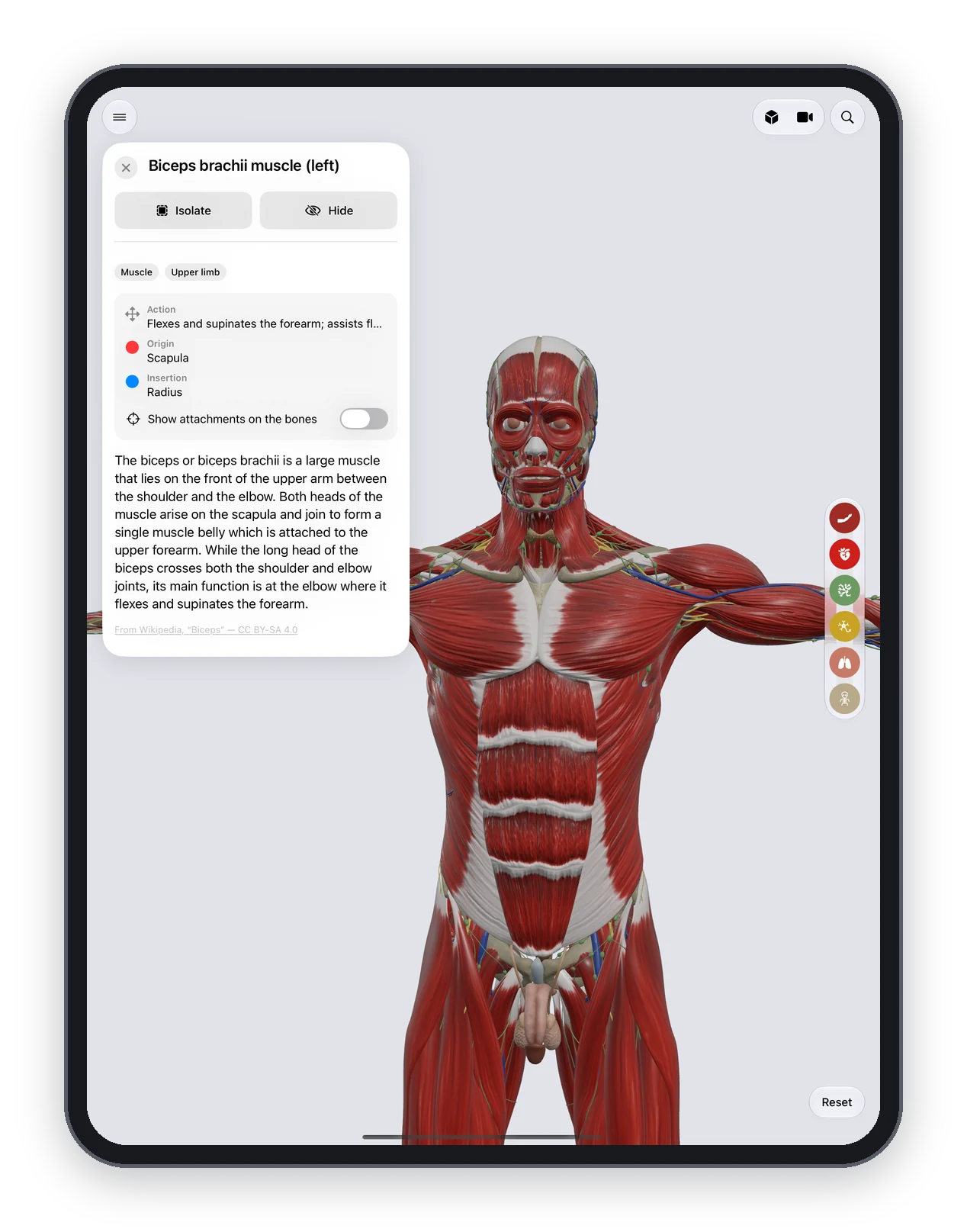
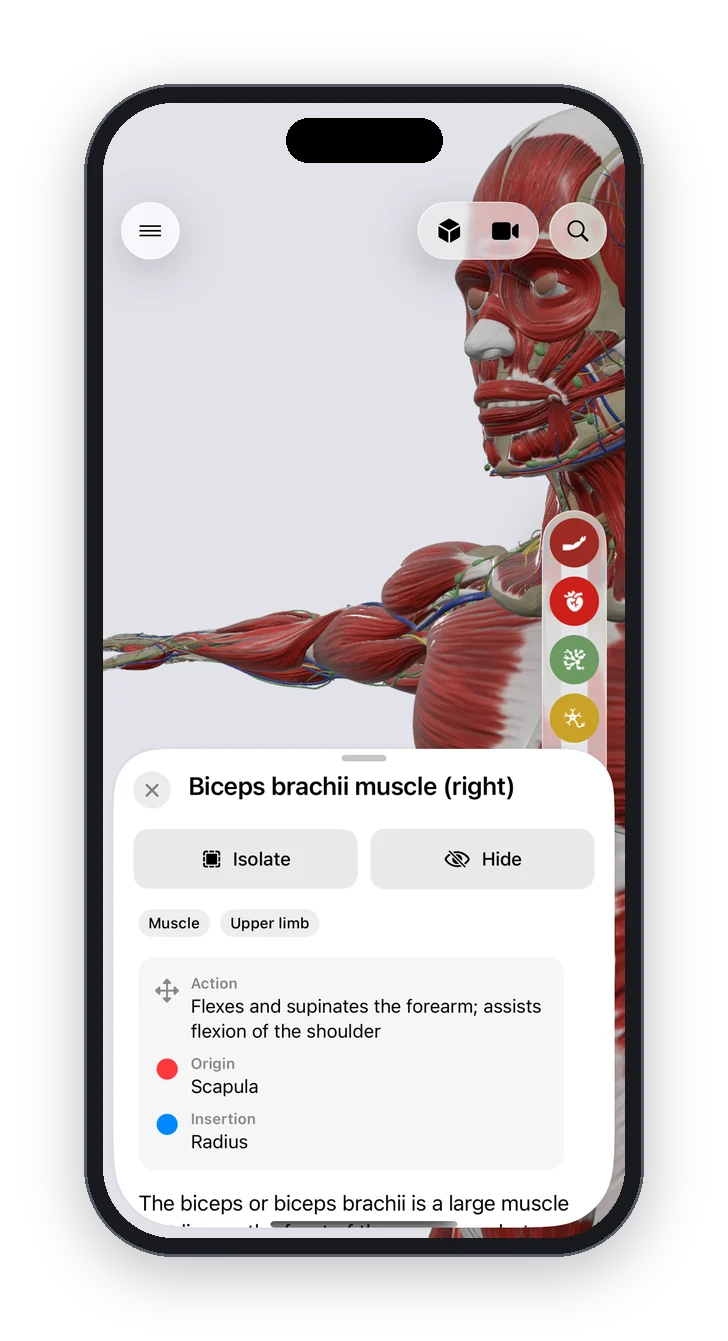
- The front box holds three muscles, B, B, C: biceps, brachialis, coracobrachialis. All three are supplied by the musculocutaneous nerve. If a question asks about a muscle of the anterior compartment of the arm, the nerve is the musculocutaneous.
- The back box holds one muscle: the triceps, with three heads and one nerve, the radial nerve. It has one main job, extending the elbow.
The two boxes are separated by sheets of connective tissue attached to the humerus, the intermuscular septa. Two of the front muscles (biceps and brachialis) bend the elbow and the back muscle straightens it, so the two boxes work against each other at the elbow.
Let the names do the work
Each name tells you something you would otherwise have to memorize:
- Biceps means two heads, triceps three heads. Brachii means "of the arm".
- Brachialis is "the arm muscle": it starts on the humerus and crosses only the elbow. A muscle that crosses only the elbow can only move the elbow, so it is a pure elbow flexor.
- Coraco-brachialis runs from the coracoid process to the brachium, the arm (it inserts on the humerus). It does not reach the elbow, so it only moves the arm at the shoulder.
Remember the attachments with three pairs
- Above and below the glenoid. The long head of the biceps starts just above the glenoid cavity (supraglenoid tubercle); the long head of the triceps starts just below it (infraglenoid tubercle). Biceps on top, triceps underneath.
- Two muscles share the coracoid. The short head of the biceps and the coracobrachialis start together on the tip of the coracoid process.
- Radius for the biceps, ulna for the brachialis and triceps, humerus for the coracobrachialis. The biceps is the only one of the four that inserts on the radius (radial tuberosity). The brachialis inserts on the front of the ulna (coronoid process), the triceps on the back of the ulna (olecranon), and the coracobrachialis stays on the humerus.
Work out the actions from the joints
Instead of learning the actions as a list, ask which joints the muscle crosses:
| Muscle | Crosses the shoulder? | Crosses the elbow? | So it… |
|---|---|---|---|
| Coracobrachialis | Yes | No | Moves only the arm at the shoulder |
| Brachialis | No | Yes | Only flexes the elbow |
| Biceps brachii | Yes | Yes, and it inserts on the radius | Flexes the elbow, supinates the forearm, helps flex the shoulder |
| Triceps brachii | Long head only | Yes | Extends the elbow; the long head also acts on the shoulder |
Because it inserts on the radius, the biceps also turns the palm up (supination), the movement you use to turn a screwdriver clockwise with your right hand, and it flexes the elbow best when the palm is already up. The brachialis inserts on the ulna, which does not rotate, so it flexes the elbow with the palm up, down or sideways.
Feel them on your own arm
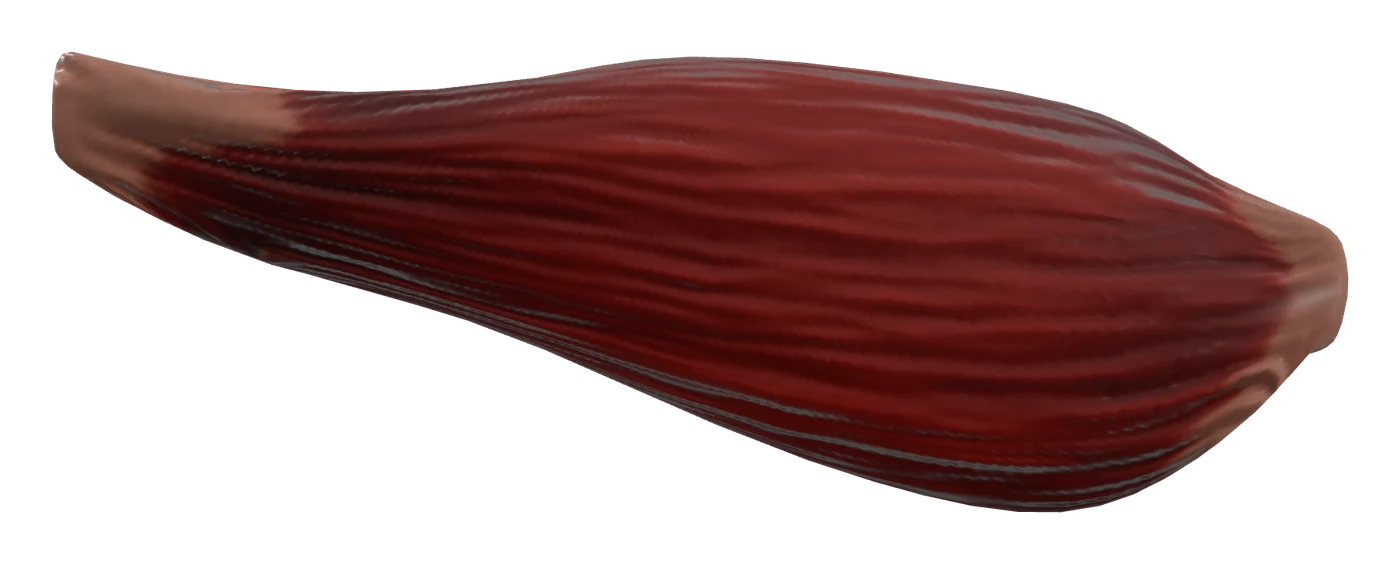
- Bend your elbow with the palm up against resistance (lift the edge of a table): the biceps hardens in front, and you can follow its tendon into the crease of the elbow.
- Bend it with the palm down: the biceps works less, and the brachialis does more of the lifting, deep to it.
- Push down on a table with your elbow slightly bent: the triceps hardens at the back of the arm, and you can feel its tendon above the olecranon.
- With the arm lifted out to the side, press high on the inner side of the arm, just behind the short head of the biceps: that is where the coracobrachialis lies.
Muscles people put in the arm by mistake
- Deltoid: it covers the top of the arm, but it is a shoulder muscle. It is on the page about the muscles of the shoulder.
- Brachioradialis: it flexes the elbow, but it lies in the forearm, starts on the humerus and ends on the radius near the wrist. See the brachioradialis page and the muscles of the forearm.
A 20-minute study plan
- 5 minutes, the two boxes: say the three front muscles, the one back muscle and each nerve out loud.
- 5 minutes, the attachments: go through the three pairs above, then draw the humerus, scapula, radius and ulna and place each origin and insertion.
- 5 minutes, the actions: fill in the joints table from memory and check it.
- 5 minutes, test yourself: in Anatomy Atlas 3D, point to each muscle and say its name, then tap it to check; or run the app's quiz, which names a structure and you tap it. On the web, the free arm and elbow quiz covers the biceps and triceps, and the full anatomy quiz the whole body. Come back to the structures you missed the next day. The elbow joint page shows how these muscles move the elbow.
Frequently asked questions
How many muscles are in the arm?
Four main muscles: biceps brachii, brachialis and coracobrachialis in the anterior compartment, and triceps brachii in the posterior compartment. Some textbooks count the small anconeus at the back of the elbow as a fifth.
What nerve supplies the muscles of the arm?
The musculocutaneous nerve supplies the three anterior muscles (biceps brachii, brachialis, coracobrachialis). The radial nerve supplies the triceps brachii. The brachialis often also receives a small branch of the radial nerve.
What is the mnemonic for the anterior arm muscles?
"BBC": biceps, brachialis, coracobrachialis. All three are in the front compartment and all three are supplied by the musculocutaneous nerve.
Which arm muscle is the main flexor of the elbow?
The brachialis. It crosses only the elbow and inserts on the ulna, so it flexes the elbow in every position of the forearm. The biceps also flexes the elbow and is strongest with the palm up.
Is the deltoid an arm muscle?
No. The deltoid covers the top of the arm and inserts on the humerus, but it is counted with the muscles of the shoulder because it moves the arm at the shoulder joint.
What is the difference between the arm and the forearm?
In anatomy, the arm (brachium) is the part between the shoulder and the elbow, with one bone, the humerus. The forearm is between the elbow and the wrist, with two bones, the radius and the ulna.
