Muscle · Upper limb
Flexor carpi ulnaris: origin, insertion, action and innervation
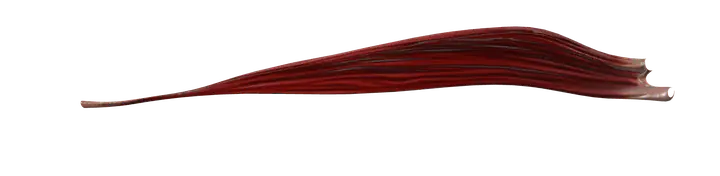
The flexor carpi ulnaris is a forearm muscle from the medial epicondyle and ulna to the pisiform. It flexes and adducts the wrist (ulnar nerve).
Quick answer
- Latin name
- Musculus flexor carpi ulnaris
- Origin
- Humeral head: medial epicondyle of the humerus (common flexor origin). Ulnar head: olecranon and upper two thirds of the posterior border of the ulna
- Insertion
- Pisiform, and through ligaments the hook of the hamate and the base of the fifth metacarpal (bones of the hand)
- Action
- Flexes the wrist and adducts it (bends it toward the little finger)
- Innervation
- Ulnar nerve (C7–T1)
- Blood supply
- Ulnar artery, including its posterior ulnar recurrent branch
See it on the 3D body
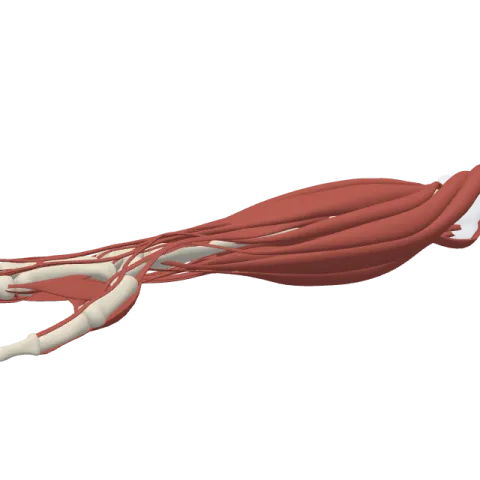
The flexor carpi ulnaris lit on the 3D forearm and hand, as in the forearm and hand quiz. Turn the body, peel the layers, tap any structure for its name.
The flexor carpi ulnaris is the superficial forearm muscle on the little-finger side, running from the elbow to the pisiform bone of the wrist. It bends the wrist forward (flexion) and toward the little finger (adduction, or ulnar deviation), and it is supplied by the ulnar nerve.
Where it is
The flexor carpi ulnaris (FCU) is the most medial muscle of the superficial layer of the anterior forearm. In the anatomical position (palms forward), it runs along the inner edge of the forearm, over the ulna. Its name says what it does and where: flexor (bends), carpi (of the wrist), ulnaris (on the ulna side).
The superficial flexors are lined up from the thumb side to the little-finger side: pronator teres, flexor carpi radialis, palmaris longus (absent in some people) and flexor carpi ulnaris. Deep to the FCU lies the flexor digitorum profundus.
The FCU has two heads, joined by a fibrous arch near the elbow. The ulnar nerve passes under this arch, between the two heads, to enter the forearm. It then runs down under the muscle, with the ulnar artery joining it in the lower forearm. At the wrist, the FCU tendon is easy to feel just above the pisiform when you flex the wrist against resistance; the ulnar nerve and artery lie right beside it, on its thumb side.
Origin and insertion
- Humeral head: the medial epicondyle of the humerus, through the common flexor tendon shared with the other superficial flexors.
- Ulnar head: the medial edge of the olecranon and the upper two thirds of the posterior border of the ulna, through a sheet of tendon (aponeurosis).
- Insertion: the pisiform, a small pea-shaped carpal bone. From there, the pull continues through two ligaments to the hook of the hamate and the base of the fifth metacarpal. See the bones of the hand for these bones.
The pisiform actually develops inside the FCU tendon, which makes it a sesamoid bone, like the kneecap in the quadriceps tendon.
What it does
- Flexion of the wrist: it bends the hand forward, toward the front of the forearm.
- Adduction of the wrist (ulnar deviation): it tilts the hand toward the little-finger side, together with the extensor carpi ulnaris on the back of the forearm.
- Combined movements: when the FCU and the flexor carpi radialis contract together, the wrist flexes straight forward, because their side pulls cancel out. When the FCU and the extensor carpi ulnaris contract together, the wrist moves straight toward the little finger.
- Steadying the pisiform: it anchors the pisiform so that the small muscle of the little finger that starts on it (abductor digiti minimi) has a fixed base.
You use it in a hammer blow, when swinging a racket or an axe, and whenever you grip hard with the wrist slightly bent.
Innervation and blood supply
The FCU is supplied by the ulnar nerve (roots C7, C8 and T1, mainly C8). This makes it unusual: most of the anterior forearm is supplied by the median nerve, and only the FCU and the medial half of the flexor digitorum profundus receive the ulnar nerve. The nerve sends its branches into the muscle near the elbow, just after passing between its two heads.
Its blood comes from the ulnar artery and its posterior ulnar recurrent branch near the elbow.
How to remember it
- Read the name: flexor + carpi + ulnaris = the wrist flexor on the ulna side, supplied by the ulnar nerve. Everything matches.
- P, F, P, F: from the thumb side to the little-finger side, the superficial flexors are Pronator teres, Flexor carpi radialis, Palmaris longus, Flexor carpi ulnaris. The initials alternate, and the FCU always closes the row on the ulnar edge.
- Two "carpi ulnaris" muscles: the flexor carpi ulnaris at the front and the extensor carpi ulnaris at the back both pull the wrist toward the little finger.
- Pisiform = pea in the tendon: the FCU is the only muscle that inserts on the pisiform.
The muscles of the forearm page explains how the flexor and extensor compartments are arranged.
Frequently asked questions
What is the action of the flexor carpi ulnaris?
It flexes the wrist and adducts it, tilting the hand toward the little finger.
Where does the flexor carpi ulnaris insert?
On the pisiform, and through ligaments on the hook of the hamate and the base of the fifth metacarpal.
Which nerve supplies the flexor carpi ulnaris?
The ulnar nerve, from roots C7 to T1. It is the only superficial forearm flexor supplied by the ulnar nerve.
What passes between the two heads of the flexor carpi ulnaris?
The ulnar nerve, as it enters the forearm from behind the medial epicondyle.
