
Rectus abdominis: origin, insertion, action and innervation
The rectus abdominis runs from the pubic crest and pubic symphysis to the xiphoid process and costal cartilages 5–7. It flexes the trunk and is supplied by the lower thoracic nerves (T7–T12).
Quick answer
- Latin name
- Musculus rectus abdominis
- Origin
- Pubic crest and pubic symphysis of the hip bone
- Insertion
- Xiphoid process of the sternum and costal cartilages of ribs 5–7
- Action
- Flexes the trunk (bends the lumbar spine), compresses the abdomen, tilts the pelvis backward
- Innervation
- Thoraco-abdominal nerves (T7–T11) and the subcostal nerve (T12)
- Blood supply
- Superior and inferior epigastric arteries
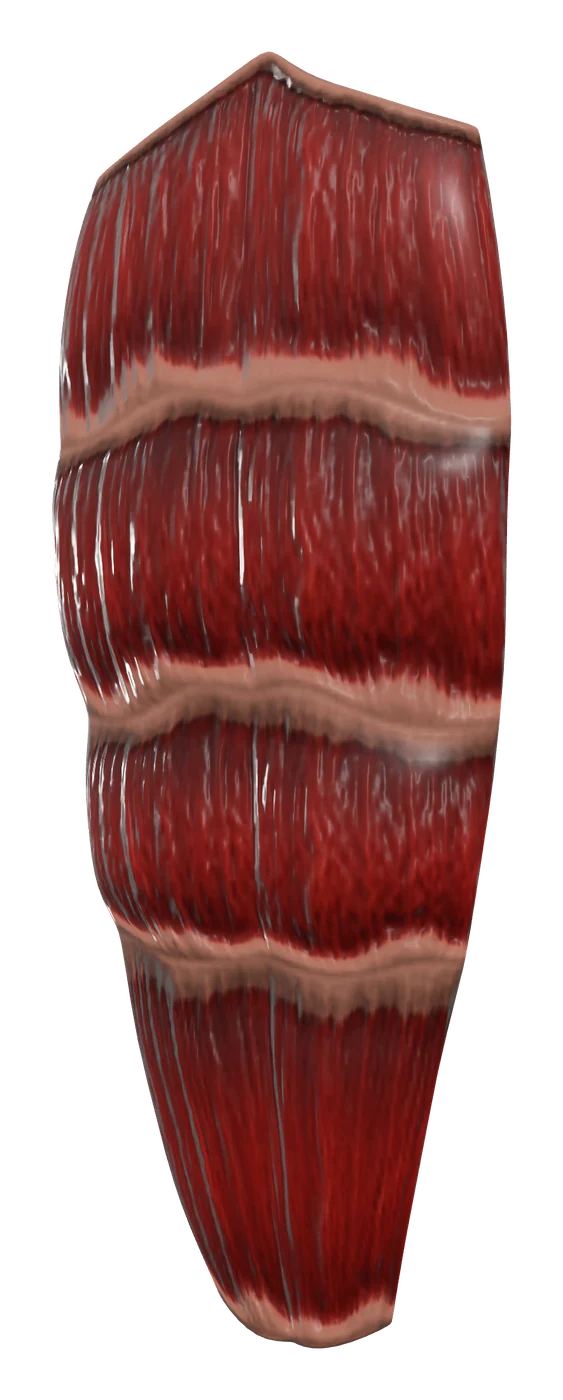
The rectus abdominis is the long, flat muscle on either side of the midline of the abdomen. Its bands of tendon, the tendinous intersections, are what create the "six-pack" in a lean, trained abdomen.
Where it is
The two recti lie side by side, separated by the linea alba, a vertical line of tendon in the midline. Each muscle is wrapped in the rectus sheath, formed by the aponeuroses of the three flat abdominal muscles. Usually three tendinous intersections cross each muscle, attached to the front of the sheath.
Origin and insertion
- Origin: the pubic crest and pubic symphysis, at the bottom of the abdomen.
- Insertion: the xiphoid process of the sternum and the costal cartilages of ribs 5, 6 and 7.
What it does
- Flexes the trunk: brings the ribcage towards the pelvis, as in a sit-up or a crunch.
- Compresses the abdomen, with the other abdominal muscles: during forced breathing out, coughing, straining.
- Tilts the pelvis backward (posterior tilt) when the trunk is fixed.
Innervation and blood supply
It's supplied segmentally by the thoraco-abdominal nerves (the lower intercostal nerves, T7 to T11) and the subcostal nerve (T12). Blood comes from the superior epigastric artery above and the inferior epigastric artery below, which meet inside the sheath.
How to remember it
- Rectus = straight: the fibres run straight up and down.
- "Pubis to ribs 5, 6, 7 and the xiphoid."
- The segmental nerves (T7–T12) match the stripes: each segment of the six-pack has its own nerve.
Frequently asked questions
What is the main action of the rectus abdominis?
It flexes the trunk, bringing the ribcage towards the pelvis.
What creates the six-pack?
The tendinous intersections, bands of tendon that cross the rectus abdominis and attach to the front of its sheath.
Which nerves supply the rectus abdominis?
The thoraco-abdominal nerves (T7–T11) and the subcostal nerve (T12).