
Muscle · Upper limb
Subscapularis: origin, insertion, action and innervation
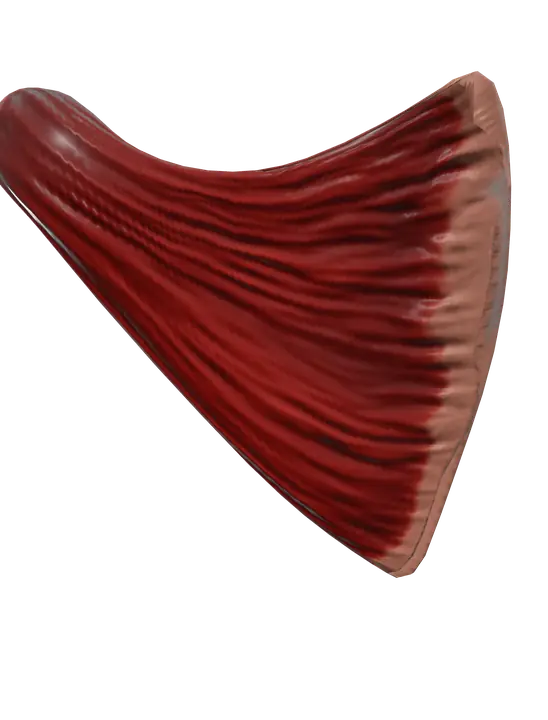
The subscapularis runs from the subscapular fossa to the lesser tubercle of the humerus. It rotates the arm inward and is supplied by the subscapular nerves.
Quick answer
- Latin name
- Musculus subscapularis
- Origin
- Subscapular fossa, on the front (costal) surface of the scapula
- Insertion
- Lesser tubercle of the humerus and the front of the shoulder joint capsule
- Action
- Medially rotates the arm; holds the head of the humerus in the glenoid cavity and supports the front of the joint
- Innervation
- Upper and lower subscapular nerves (C5–C6)
- Blood supply
- Branches of the subscapular artery
See it on the 3D body
The subscapularis lit on the 3D shoulder, as in the shoulder quiz. Turn the body, peel the layers, tap any structure for its name.
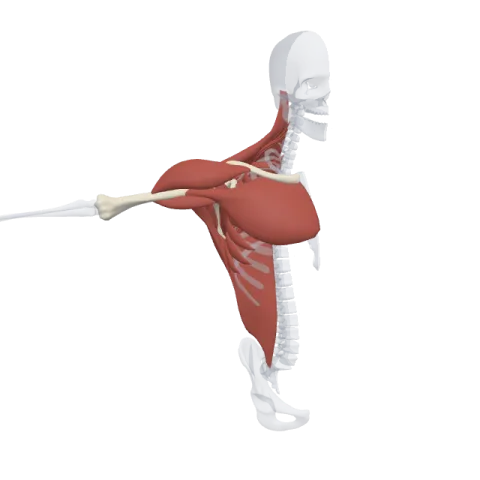
The subscapularis is the large, triangular rotator cuff muscle that covers the front of the shoulder blade, against the ribs. It turns the arm inward (medial rotation) and is the only rotator cuff muscle on the front of the shoulder.
Where it is
The subscapularis fills the subscapular fossa, the shallow hollow on the front (costal) surface of the scapula, the side that faces the ribcage. It lies sandwiched between the scapula behind and the serratus anterior in front, which separates it from the ribs. Because of this position, you cannot see it from the back, and from the front it is hidden by the chest muscles.
It forms most of the posterior wall of the axilla (armpit). Its fibers converge laterally into a broad tendon that passes in front of the shoulder joint, just below the coracoid process, to reach the humerus. A small fluid-filled sac, the subscapular bursa, lies between the tendon and the neck of the scapula and lets it glide smoothly.
It is the largest and strongest of the four rotator cuff muscles.
Origin and insertion
- Origin: most of the subscapular fossa, on the costal surface of the scapula.
- Insertion: the lesser tubercle of the humerus, the small bump on the front of the upper humerus, and the front of the shoulder joint capsule.
This makes it the odd one out of the cuff: the other three (supraspinatus, infraspinatus and teres minor) all insert on the greater tubercle. The intertubercular groove, which carries the tendon of the long head of the biceps brachii, runs between the two tubercles.
What it does
- Medial rotation of the arm: it turns the humerus inward, so that the front of the arm faces the body. It is the main medial rotator of the rotator cuff, and works with the pectoralis major, the latissimus dorsi, the teres major and the anterior fibers of the deltoid.
- Stabilizing the shoulder: like the other cuff muscles, it presses the head of the humerus into the shallow glenoid cavity. Its tendon blends with the front of the capsule and helps stop the head of the humerus from sliding forward out of the socket, especially when the arm is at the side.
- Balancing the cuff: the infraspinatus and teres minor rotate the arm outward from behind. The subscapularis pulls from the front, and the balance between them keeps the head of the humerus centered while larger muscles move the arm.
You use it when you tuck your hand behind your back, fold your arms across your chest or bring the arm forward and inward in a throw.
Innervation and blood supply
The subscapularis is supplied by the upper and lower subscapular nerves (roots C5 and C6), both branches of the posterior cord of the brachial plexus. The upper subscapular nerve enters the upper part of the muscle; the lower subscapular nerve supplies its lower part and continues to the teres major.
Its blood comes mainly from branches of the subscapular artery, the largest branch of the axillary artery, which runs along the lateral border of the scapula.
How to remember it
- SITS: Supraspinatus, Infraspinatus, Teres minor, Subscapularis. The final S is the one on the front.
- Sub = under: it lies under (in front of) the scapula, against the ribs.
- "Three to the greater, one to the lesser": the subscapularis is the only cuff muscle to insert on the lesser tubercle.
- Front muscle, inward turn: the subscapularis is the only rotator cuff muscle that rotates the arm medially.
The muscles of the shoulder page shows all four cuff muscles together. In the app, rotate the model to look into the armpit and the subscapularis appears between the scapula and the ribs.
Frequently asked questions
Is the subscapularis part of the rotator cuff?
Yes. It is one of the four rotator cuff muscles and the largest of them. It is the only one on the front of the scapula.
What is the action of the subscapularis?
It medially (internally) rotates the arm at the shoulder and helps hold the head of the humerus in the glenoid cavity.
Where does the subscapularis insert?
On the lesser tubercle of the humerus. The other three rotator cuff muscles insert on the greater tubercle.
Which nerve supplies the subscapularis?
The upper and lower subscapular nerves, from roots C5 and C6 through the posterior cord of the brachial plexus.
Why can't you see the subscapularis from behind?
Because it covers the front surface of the scapula, between the shoulder blade and the ribs. The infraspinatus and supraspinatus cover the back.
