
Muscle · Upper limb
Teres major: origin, insertion, action and innervation
The teres major runs from the inferior angle of the scapula to the humerus. It adducts, extends and medially rotates the arm (lower subscapular nerve).
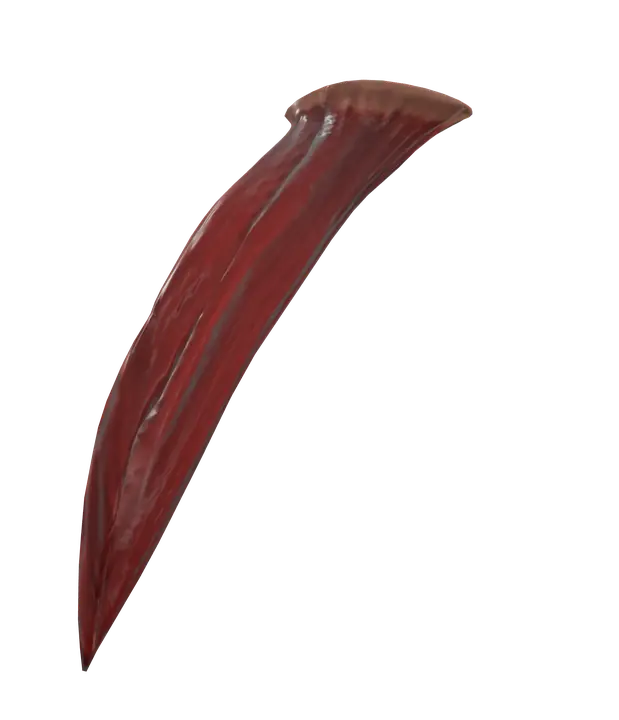
Quick answer
- Latin name
- Musculus teres major
- Origin
- Back surface of the inferior angle and lower lateral border of the scapula
- Insertion
- Medial lip of the intertubercular groove (crest of the lesser tubercle) of the humerus
- Action
- Adducts, extends and medially rotates the arm
- Innervation
- Lower subscapular nerve (C5–C6)
- Blood supply
- Circumflex scapular artery and thoracodorsal artery
See it on the 3D body
The teres major lit on the 3D shoulder, as in the shoulder quiz. Turn the body, peel the layers, tap any structure for its name.
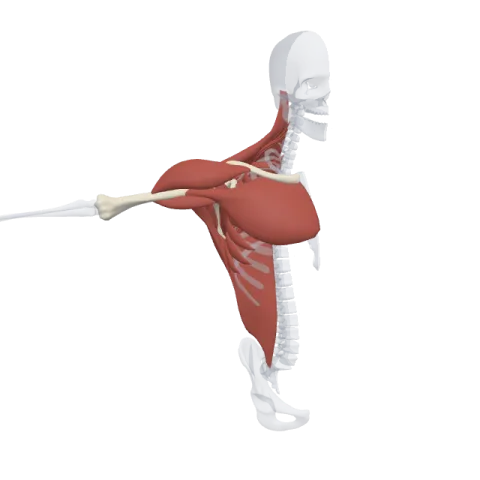
The teres major is a thick, rounded muscle that runs from the lower corner of the shoulder blade to the front of the upper humerus. It pulls the arm down, back and inward (adduction, extension and medial rotation), working closely with the latissimus dorsi.
Where it is
The teres major lies on the back of the shoulder, along the lower part of the lateral border of the scapula, near the inferior angle. From there it runs up and outward, passes in front of the long head of the triceps and wraps around to the front of the humerus.
Together with the latissimus dorsi, which curls around it, it forms the posterior axillary fold, the soft ridge of muscle you can grasp at the back of your armpit. Its name means "the larger rounded muscle", to set it apart from the teres minor that lies just above it.
Its position makes it a landmark for three small spaces at the back of the shoulder:
- The quadrangular space: teres minor above, teres major below, long head of the triceps brachii on the inside, humerus on the outside. The axillary nerve and posterior circumflex humeral artery pass through.
- The triangular space: teres minor above, teres major below, long head of the triceps laterally. It carries the circumflex scapular artery.
- The triangular interval: teres major above, long head of the triceps on the inside, humerus on the outside. The radial nerve and the deep artery of the arm pass through it into the back of the arm.
Origin and insertion
- Origin: the back (dorsal) surface of the inferior angle of the scapula and the lower part of its lateral border.
- Insertion: the medial lip of the intertubercular groove (also called the crest of the lesser tubercle) on the front of the humerus.
The tendon of the latissimus dorsi inserts right next to it, on the floor of the same groove. This shared destination is why the two muscles do almost the same job.
What it does
The teres major moves the arm at the shoulder joint:
- Adduction: brings the raised arm back down to the side of the body.
- Extension: pulls the arm backward from a forward position.
- Medial rotation: turns the arm inward.
These are exactly the actions of the latissimus dorsi, which is why the teres major is nicknamed "lat's little helper". It is most active when these movements meet resistance, as in a pull-up, a rowing stroke or pulling yourself up a rope. Its pull on the humerus would also drag the scapula, so the rhomboids and other scapular muscles steady the shoulder blade while it works.
Although it runs next to the rotator cuff, the teres major is not a rotator cuff muscle: its tendon does not blend with the shoulder joint capsule, and it rotates the arm inward rather than outward like the teres minor.
Innervation and blood supply
The teres major is supplied by the lower subscapular nerve (roots C5 and C6), a branch of the posterior cord of the brachial plexus. The same nerve also supplies the lower part of the subscapularis, another medial rotator.
Its blood comes from the circumflex scapular artery and the thoracodorsal artery, both branches of the subscapular artery.
How to remember it
- Lat's little helper: same insertion area, same three actions as the latissimus dorsi.
- "Minor is in the cuff, major is not": the teres minor belongs to the rotator cuff, the teres major does not.
- The two teres muscles do opposite rotations: the minor turns the arm out, the major turns it in.
- The long head of the triceps runs between the two teres muscles; this one fact lets you draw all three spaces.
The muscles of the shoulder page shows how it fits with the cuff and the other scapular muscles.
Frequently asked questions
Is the teres major part of the rotator cuff?
No. The rotator cuff is supraspinatus, infraspinatus, teres minor and subscapularis. The teres major lies close by but does not support the joint capsule.
What is the action of the teres major?
It adducts, extends and medially rotates the arm at the shoulder, like the latissimus dorsi.
Why is the teres major called lat's little helper?
Because it inserts right next to the latissimus dorsi on the humerus and performs the same three movements.
Which nerve supplies the teres major?
The lower subscapular nerve, from roots C5 and C6.
Where does the teres major insert?
On the medial lip of the intertubercular groove of the humerus, beside the tendon of the latissimus dorsi.
