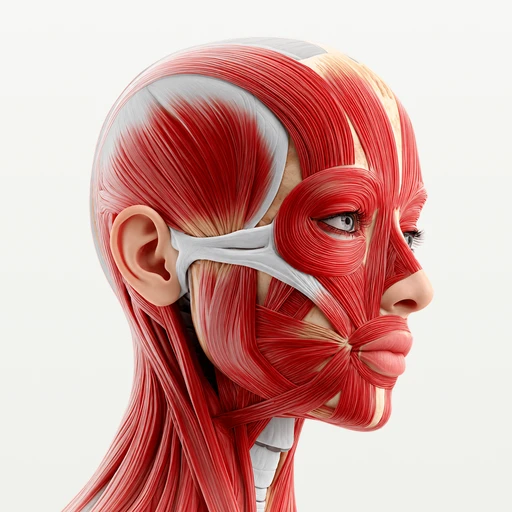
Muscle · Head and neck
Zygomaticus minor: origin, insertion, action and innervation
The zygomaticus minor runs from the zygomatic bone to the upper lip. It elevates the upper lip, showing the upper teeth, and is supplied by the facial nerve.
Quick answer
- Latin name
- Musculus zygomaticus minor
- Origin
- Front of the lateral surface of the zygomatic bone, just behind the zygomaticomaxillary suture (part of the skull)
- Insertion
- Muscle and skin of the lateral part of the upper lip
- Action
- Elevates the upper lip, showing the upper teeth and deepening the nasolabial fold
- Innervation
- Zygomatic and buccal branches of the facial nerve (VII)
- Blood supply
- Branches of the facial artery, mainly the superior labial artery
See it on the 3D body
The zygomaticus minor lit on the 3D head, as in the head quiz. Turn the body, peel the layers, tap any structure for its name.
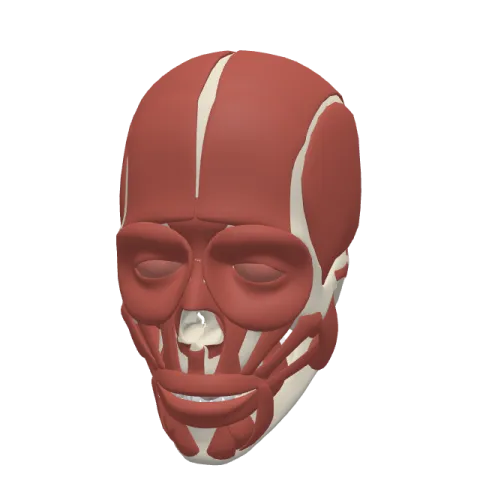
The zygomaticus minor is a slim muscle of facial expression that runs from the front of the cheekbone down to the upper lip. It lifts the upper lip and shows the upper teeth, and it is supplied by the zygomatic and buccal branches of the facial nerve.
Where it is
The zygomaticus minor lies in the cheek, between the side of the nose and the cheekbone. It runs downward and slightly inward from the zygomatic bone to the upper lip, just lateral to the levator labii superioris.
It is part of a fan of four superficial muscles that lift the upper lip and the corner of the mouth. From the nose outward toward the cheekbone, they are:
- the levator labii superioris alaeque nasi, along the side of the nose;
- the levator labii superioris, from the lower rim of the orbit;
- the zygomaticus minor, from the front of the zygomatic bone;
- the zygomaticus major, from the side of the zygomatic bone.
The zygomaticus minor is thinner and shorter than the zygomaticus major, and in some people it is small or blends with the levator labii superioris, so it can be hard to pick out. Below it, all these muscles end in or near the orbicularis oris, the ring of the lips.
Origin and insertion
- Origin: the front of the lateral surface of the zygomatic bone, just behind the zygomaticomaxillary suture, where the cheekbone meets the maxilla. Both bones belong to the facial skeleton of the skull. The origin is medial to and slightly in front of that of the zygomaticus major.
- Insertion: the lateral part of the upper lip, where its fibers blend with the levator labii superioris and the orbicularis oris and attach to the skin of the lip.
The key difference with its larger neighbor is the endpoint. The zygomaticus major goes to the corner of the mouth; the zygomaticus minor stops short of it, on the upper lip itself.
What it does
- Lifting the upper lip: it pulls the outer part of the upper lip upward and a little outward, uncovering the upper teeth.
- Deepening the nasolabial fold: as the lip rises, the crease running from the side of the nose to the corner of the mouth becomes deeper.
It works in broad smiles, where the upper teeth show, together with the zygomaticus major and the levators. Acting with the levator labii superioris, it also helps produce the raised upper lip of a sneer or of contempt, depending on what the other muscles are doing.
Innervation and blood supply
The zygomaticus minor is supplied by the zygomatic and buccal branches of the facial nerve (cranial nerve VII), the same branches that supply the zygomaticus major. They cross the cheek from the parotid gland and enter the muscle from its deep surface.
Its blood comes from branches of the facial artery, mainly the superior labial artery, which runs inside the upper lip, with small branches from the angular artery along the side of the nose.
How to remember it
- Minor goes to the lip: the smaller zygomaticus stops on the upper lip; the bigger one reaches the corner of the mouth.
- Same bone, same nerve: both zygomaticus muscles start on the zygomatic bone and share the zygomatic and buccal branches.
- Count the fan: from the nose outward, levator alaeque nasi, levator labii, zygomaticus minor, zygomaticus major. Minor is number three.
- Show your canines: lift the outer part of your upper lip to show your upper teeth. The pull from the cheekbone is the zygomaticus minor.
The muscles of the face page shows the full fan of upper lip muscles. Test yourself in the head quiz.
Frequently asked questions
What does the zygomaticus minor do?
It elevates the upper lip, showing the upper teeth and deepening the nasolabial fold.
Which nerve supplies the zygomaticus minor?
The zygomatic and buccal branches of the facial nerve (VII).
Where does the zygomaticus minor insert?
On the lateral part of the upper lip, where it blends with the levator labii superioris and the orbicularis oris.
Is the zygomaticus minor a smiling muscle?
It helps in broad smiles by raising the upper lip, but the main smiling muscle is the zygomaticus major.
