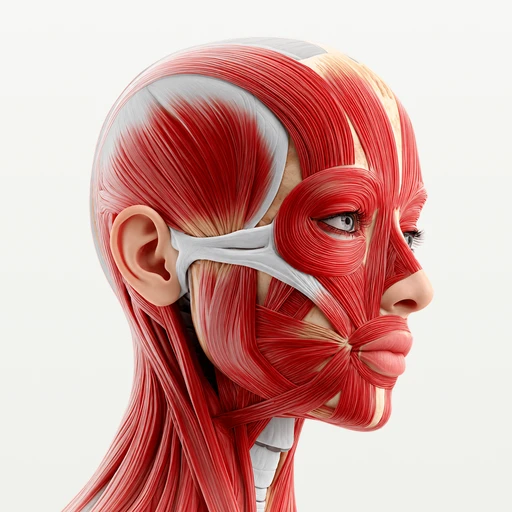
Sternocleidomastoid: origin, insertion, action and innervation
The sternocleidomastoid arises from the manubrium of the sternum and the clavicle and inserts on the mastoid process. It turns the head to the opposite side, flexes the neck and is supplied by the accessory nerve.
Quick answer
- Latin name
- Musculus sternocleidomastoideus
- Origin
- Sternal head: front of the manubrium of the sternum. Clavicular head: medial third of the clavicle
- Insertion
- Mastoid process of the temporal bone and the lateral half of the superior nuchal line
- Action
- One side: tilts the head to the same side and turns the face to the opposite side. Both sides: flex the neck and, with the head fixed, help lift the sternum in forced breathing
- Innervation
- Spinal accessory nerve (cranial nerve XI); C2–C3 for sensation
- Blood supply
- Branches of the occipital and superior thyroid arteries
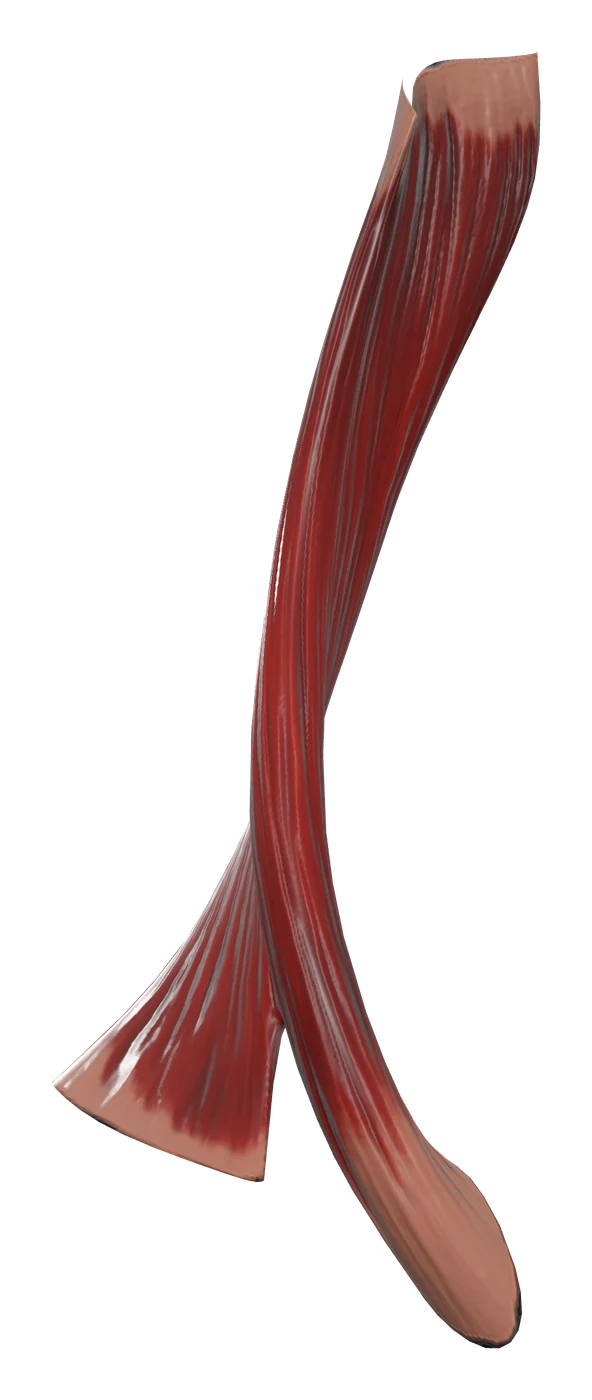
The sternocleidomastoid (SCM) is the long strap that stands out on the side of the neck when you turn your head. Its name lists its three attachments: sterno- (sternum), cleido- (clavicle) and mastoid (mastoid process).
Where it is
It runs diagonally across the side of the neck, from the top of the sternum and the inner clavicle up and back to the bony bump behind the ear. It divides the neck into the anterior and posterior triangles, which surgeons and anatomists use to locate everything else in the neck.
Origin and insertion
- Sternal head: a rounded tendon from the front of the manubrium of the sternum.
- Clavicular head: a flatter band from the medial third of the clavicle.
- Insertion: the mastoid process of the temporal bone and the lateral part of the superior nuchal line of the occipital bone.
What it does
- Acting on one side: tilts the head towards the same shoulder and turns the face to the opposite side. The right SCM turns your face to the left.
- Acting on both sides: flexes the neck, bringing the chin towards the chest.
- Accessory breathing muscle: with the head fixed, it helps lift the sternum and clavicles during deep inspiration.
Innervation and blood supply
Like the trapezius, it's supplied by the spinal accessory nerve (cranial nerve XI), with C2–C3 fibres for sensation. Its blood comes from branches of the occipital and superior thyroid arteries.
How to remember it
- The name is the attachments: sternum, clavicle, mastoid.
- "Right SCM, look left": one side turns the face away.
- SCM and trapezius share cranial nerve XI.
Frequently asked questions
What does the sternocleidomastoid do?
One side tilts the head to the same side and turns the face to the opposite side; both sides together flex the neck.
Which nerve supplies the sternocleidomastoid?
The spinal accessory nerve (cranial nerve XI).
Where does the sternocleidomastoid insert?
On the mastoid process of the temporal bone and the lateral superior nuchal line.