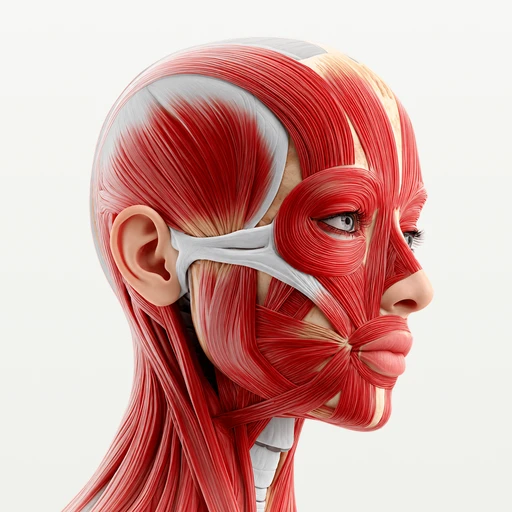
Trapezius: origin, insertion, action and innervation
The trapezius arises from the skull and the spines of C7–T12 and inserts on the clavicle, acromion and spine of the scapula. It elevates, retracts, depresses and rotates the scapula, and is supplied by the accessory nerve.
Quick answer
- Latin name
- Musculus trapezius
- Origin
- External occipital protuberance and superior nuchal line, nuchal ligament, spinous processes of C7–T12
- Action
- Upper fibres elevate the scapula; middle fibres retract it; lower fibres depress it; upper and lower fibres together rotate it upward
- Innervation
- Spinal accessory nerve (cranial nerve XI); C3–C4 for sensation
- Blood supply
- Superficial branch of the transverse cervical artery
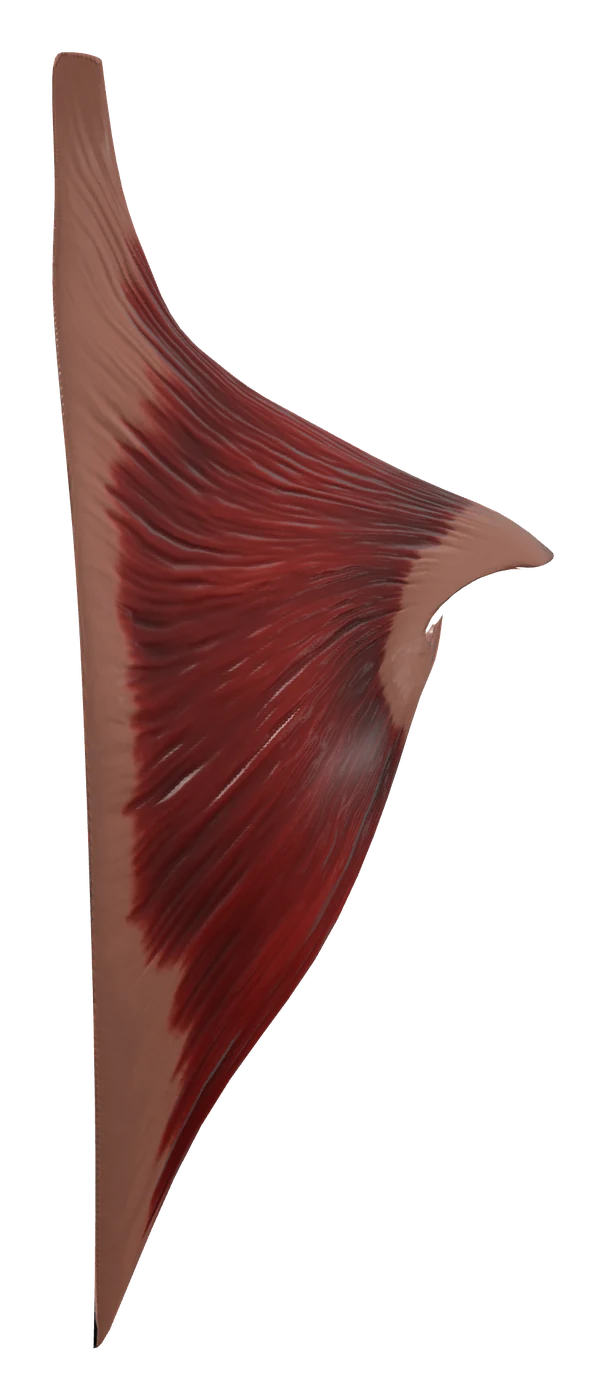
The two trapezius muscles together form a large diamond (a trapezium) on the upper back and neck. They hold the shoulder blades in place and move them in almost every arm movement.
Where it is
The trapezius is the most superficial muscle of the upper back. It runs from the base of the skull down to the middle of the back, and out to the tip of the shoulder. It's usually described in three parts: upper (descending), middle (transverse) and lower (ascending) fibres.
Origin and insertion
- Origin: the external occipital protuberance and the medial superior nuchal line of the skull, the nuchal ligament, and the spinous processes of C7 to T12.
- Insertion: the lateral third of the clavicle, the acromion and the spine of the scapula. This is the same line where the deltoid starts on the other side.
What it does
- Upper fibres: elevate the scapula, as in shrugging.
- Middle fibres: retract the scapula, pulling the shoulder blades together.
- Lower fibres: depress the scapula.
- Upward rotation: upper and lower fibres together rotate the scapula so the shoulder socket faces up, which lets the arm rise above the head, together with the serratus anterior.
With the shoulders fixed, the upper fibres also extend and tilt the head.
Innervation and blood supply
Motor supply comes from the spinal accessory nerve (cranial nerve XI). Branches of C3 and C4 carry sensation and proprioception. Blood comes mainly from the transverse cervical artery.
How to remember it
- "Shrug, squeeze, slide down": upper, middle, lower fibres.
- Trapezius and sternocleidomastoid share the same nerve, the accessory nerve (XI).
Frequently asked questions
What does the trapezius do?
It moves and stabilises the scapula: elevation, retraction, depression and upward rotation.
Which nerve supplies the trapezius?
The spinal accessory nerve (cranial nerve XI) for movement, with C3–C4 branches for sensation.
Where does the trapezius insert?
On the lateral third of the clavicle, the acromion and the spine of the scapula.