
Clavicle: anatomy, landmarks and muscle attachments
The clavicle, or collarbone, is an S-shaped bone that links the sternum to the scapula. Learn its ends, its joints and the muscles that attach to it, from the deltoid to the sternocleidomastoid.
Quick answer
- Latin name
- Clavicula
- Type
- Long bone (S-shaped)
- Location
- Front of the base of the neck, from the sternum to the shoulder
- Main landmarks
- Sternal (medial) end, acromial (lateral) end, conoid tubercle, trapezoid line, subclavian groove
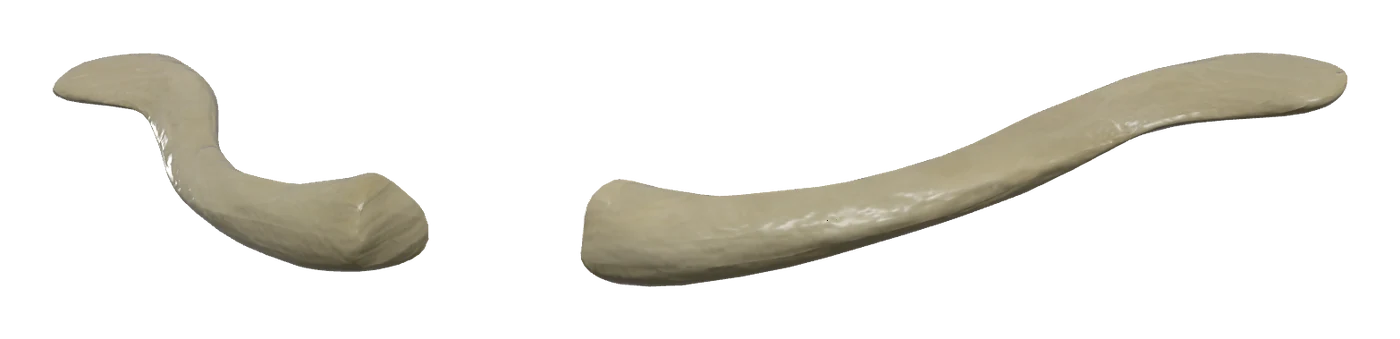
The clavicle is the long bone you can feel along the front of the shoulder. It works like a strut that holds the shoulder away from the chest, and it's the only bony connection between the upper limb and the trunk.
Shape and ends
- It has a gentle S-shape: curved forward in its medial two thirds, curved backward in its lateral third.
- The sternal end is thick and rounded; it meets the manubrium of the sternum at the sternoclavicular joint.
- The acromial end is flat; it meets the acromion of the scapula at the acromioclavicular joint.
- On its underside, the conoid tubercle and trapezoid line anchor the strong coracoclavicular ligament.
Muscles attached
- On the lateral third: the deltoid (front) and the trapezius (back).
- On the medial part: the pectoralis major (clavicular head) and the sternocleidomastoid (clavicular head).
- On the underside: the subclavius.
Why it fractures so often
The clavicle transmits forces from the arm to the trunk. A fall on the shoulder or an outstretched hand can break it, most often in its middle third, where the two curves meet.
Frequently asked questions
What does the clavicle articulate with?
The manubrium of the sternum medially and the acromion of the scapula laterally.
Which muscles attach to the clavicle?
The deltoid, trapezius, pectoralis major, sternocleidomastoid and subclavius.
Why is the clavicle S-shaped?
The curves add strength and give room for the vessels and nerves passing under it to the arm.