Muscle · Upper limb
Infraspinatus: origin, insertion, action and innervation
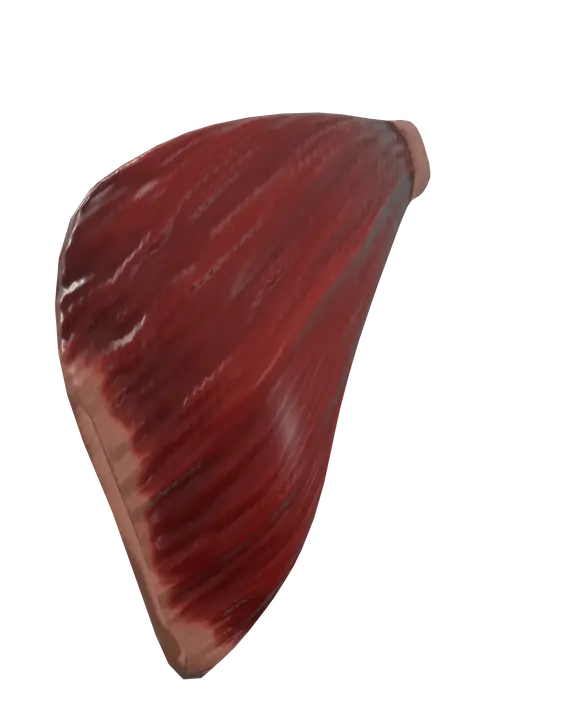
The infraspinatus runs from the infraspinous fossa of the scapula to the greater tubercle of the humerus. It rotates the arm outward; suprascapular nerve.
Quick answer
- Latin name
- Musculus infraspinatus
- Origin
- Infraspinous fossa of the scapula
- Insertion
- Middle facet of the greater tubercle of the humerus
- Action
- Laterally rotates the arm; holds the head of the humerus in the glenoid cavity
- Innervation
- Suprascapular nerve (C5–C6)
- Blood supply
- Suprascapular artery and circumflex scapular artery
See it on the 3D body
The infraspinatus lit on the 3D shoulder, as in the shoulder quiz. Turn the body, peel the layers, tap any structure for its name.
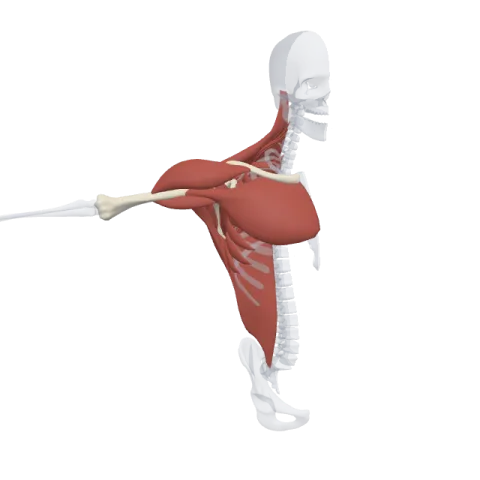
The infraspinatus is a thick, triangular rotator cuff muscle that covers most of the back of the shoulder blade, below its spine. It is the main muscle that turns the arm outward (lateral rotation), and it helps keep the head of the humerus centered in its shallow socket.
Where it is
The infraspinatus fills the infraspinous fossa, the broad hollow on the back of the scapula below the spine. Its upper and lateral parts are covered by the trapezius and the back of the deltoid, and its lower edge is overlapped by the latissimus dorsi. In between, a patch of the muscle lies just under the skin, wrapped in a thick, shiny sheet called the infraspinous fascia.
Its fibers run sideways and slightly upward, converging into a flat tendon. The tendon crosses the back of the shoulder joint, blends with the joint capsule and ends on the top of the humerus. Just below it runs the teres minor, which follows almost the same path; the two muscles are often partly fused and can be hard to separate.
Origin and insertion
- Origin: the medial two thirds of the infraspinous fossa, plus the deep surface of the infraspinous fascia that covers it.
- Insertion: the middle facet of the greater tubercle of the humerus. The supraspinatus takes the facet above, and the teres minor the one below. Some fibers also attach to the back of the shoulder joint capsule.
Because its tendon is fused with the capsule, the infraspinatus reinforces the joint from behind, where there is no strong ligament.
What it does
- Lateral rotation of the arm: it turns the humerus outward, so that the front of the arm faces sideways. It is the strongest lateral rotator of the shoulder, helped by the teres minor and the posterior fibers of the deltoid. You use it to comb the back of your hair, to wind the arm back before a throw or to swing the arm outward in a tennis backhand.
- Stabilizing the shoulder: like the other rotator cuff muscles, it pulls the head of the humerus into the glenoid cavity while larger muscles move the arm. Its tendon also stops the head from sliding backward out of the socket.
- Balancing the front of the cuff: the subscapularis on the front of the scapula rotates the arm inward. The infraspinatus and teres minor pull the other way, and together they keep the head of the humerus centered.
Some anatomists add that its upper fibers can help abduct the arm and its lower fibers help adduct it, but these are minor roles compared with lateral rotation.
Innervation and blood supply
The infraspinatus is supplied by the suprascapular nerve (roots C5 and C6), a branch of the upper trunk of the brachial plexus. The nerve passes through the suprascapular notch on the upper border of the scapula, supplies the supraspinatus, then winds around the lateral edge of the scapular spine (the spinoglenoid notch) to reach the infraspinatus. One nerve therefore serves both muscles, above and below the spine.
Its blood comes mainly from the suprascapular artery, which follows the nerve, and from the circumflex scapular artery, which curls around the lateral border of the scapula. The two arteries join in the infraspinous fossa, part of a network of vessels around the scapula.
How to remember it
- The rotator cuff is SITS: Supraspinatus, Infraspinatus, Teres minor, Subscapularis. The infraspinatus is the I.
- Infra = below the spine, supra = above it. Both share the suprascapular nerve: one nerve, two fossae.
- On the greater tubercle, the facets go S, I, T from top to bottom.
- The two muscles on the back (infraspinatus, teres minor) rotate the arm out; the one on the front (subscapularis) rotates it in.
In the app, hide the trapezius and the deltoid and the whole infraspinatus appears, with the teres minor right under it. The muscles of the shoulder page puts it in context with the other cuff muscles.
Frequently asked questions
Is the infraspinatus part of the rotator cuff?
Yes. It is one of the four rotator cuff muscles, together with the supraspinatus, the teres minor and the subscapularis.
What is the main action of the infraspinatus?
Lateral (external) rotation of the arm at the shoulder. It also helps hold the head of the humerus in the glenoid cavity.
What is the difference between the supraspinatus and the infraspinatus?
The supraspinatus lies above the spine of the scapula and starts abduction of the arm. The infraspinatus lies below the spine and rotates the arm outward. Both insert on the greater tubercle and share the suprascapular nerve.
Which nerve supplies the infraspinatus?
The suprascapular nerve, from roots C5 and C6.
Where does the infraspinatus insert?
On the middle facet of the greater tubercle of the humerus, between the supraspinatus above and the teres minor below.
