Deltoid muscle: origin, insertion, action and innervation
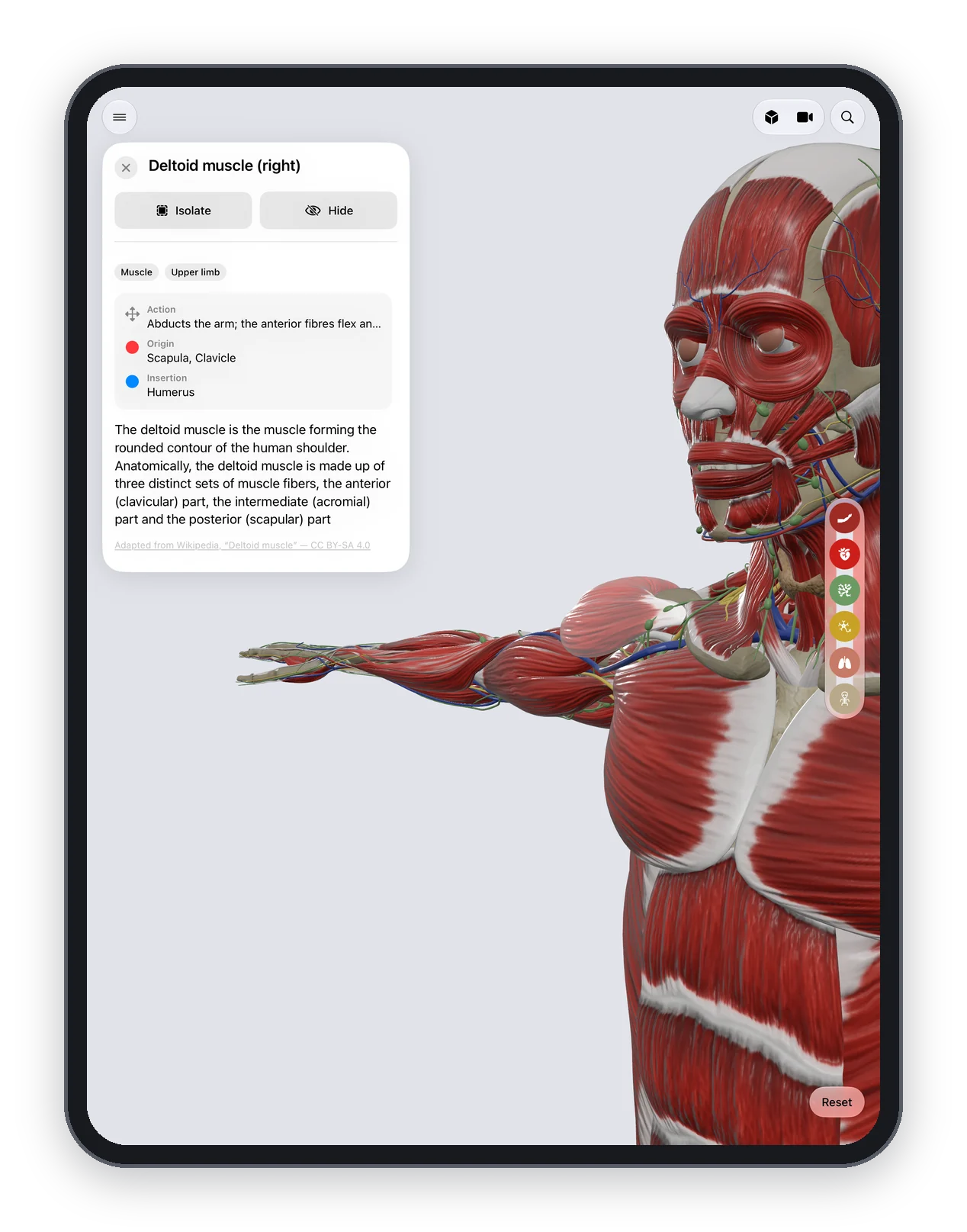
The deltoid arises from the clavicle, acromion and spine of the scapula and inserts on the deltoid tuberosity of the humerus. It abducts the arm and is supplied by the axillary nerve.
Quick answer
- Latin name
- Musculus deltoideus
- Insertion
- Deltoid tuberosity of the humerus
- Action
- Abducts the arm; anterior fibres flex and medially rotate it; posterior fibres extend and laterally rotate it
- Innervation
- Axillary nerve (C5–C6)
- Blood supply
- Posterior circumflex humeral artery, and the deltoid branch of the thoraco-acromial artery
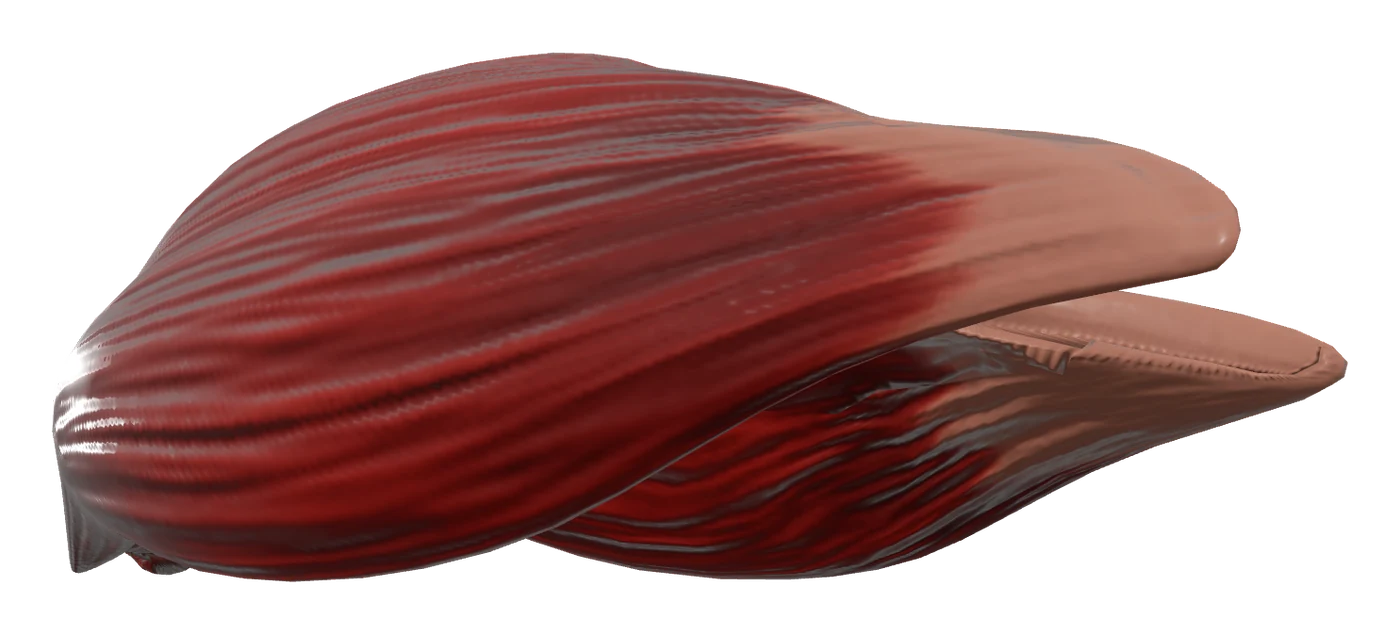
The deltoid is the thick, triangular muscle that gives the shoulder its rounded shape. Its name comes from the Greek letter delta (Δ), because it looks like an upside-down triangle.
Where it is
The deltoid wraps over the shoulder joint from the front, the side and the back, covering the head of the humerus and the rotator cuff tendons beneath it. Its fibres converge downwards to a single point halfway down the outer side of the arm.
Origin and insertion
The deltoid has a long, curved origin that mirrors the insertion of the trapezius on the other side of the same bones:
- Anterior (clavicular) part: lateral third of the clavicle.
- Middle (acromial) part: the acromion.
- Posterior (spinal) part: the spine of the scapula.
All fibres insert on the deltoid tuberosity, a rough V-shaped area on the lateral side of the humerus.
What it does
The three parts can act together or separately:
- Middle fibres: abduct the arm (lift it out to the side). The supraspinatus starts the movement; the deltoid takes over and carries it to about 90°, after which the scapula has to rotate.
- Anterior fibres: flex and medially rotate the arm, as when reaching forward.
- Posterior fibres: extend and laterally rotate the arm, as when reaching back.
The deltoid also helps keep the head of the humerus in place when you carry something heavy at your side.
Innervation and blood supply
The deltoid is supplied by the axillary nerve (roots C5 and C6), which winds around the surgical neck of the humerus from back to front with the posterior circumflex humeral artery, the muscle's main blood supply.
How to remember it
- Delta = triangle = three parts (anterior, middle, posterior), one insertion.
- "Clavicle, acromion, spine": the deltoid starts where the trapezius ends.
- The axillary nerve hugs the surgical neck of the humerus, which is why fractures there can affect the deltoid.
Frequently asked questions
What is the main action of the deltoid?
Abduction of the arm, by its middle fibres, from about 15° to 90°. The anterior and posterior fibres also flex and extend the arm.
Where does the deltoid insert?
On the deltoid tuberosity, on the lateral side of the shaft of the humerus.
Which nerve supplies the deltoid?
The axillary nerve, from roots C5 and C6.